








Videos
The Lapsed Atheist: Charles Murray Makes The Case For God
Charles Murray joins Peter Robinson to discuss the evidence that forced him to reconsider God, the soul, and Christianity.
August 17, 2026 • 66 Min Watch
Charles Palm, Deputy Director Emeritus of the Hoover Institution, recalls the ambitious effort he spearheaded to microfilm the newly opened Soviet archives after the collapse of the USSR in 1991. The landmark project made available a "massive trove of Soviet government and Communist Party records" to researchers everywhere.
Documenting Communism: The Hoover Project to Microfilm and Publish the Soviet Archives by Charles G. Palm (Hoover Institution Press: June 2024). Foreword by Condoleezza Rice. Introduction by Stephen Kotkin.
The Archives of the Soviet Communist Party and Soviet State Microfilm Collection are housed at the Hoover Institution Library & Archives at Stanford University. Explore the finding aids for the collection here.
WATCH THE VIDEO
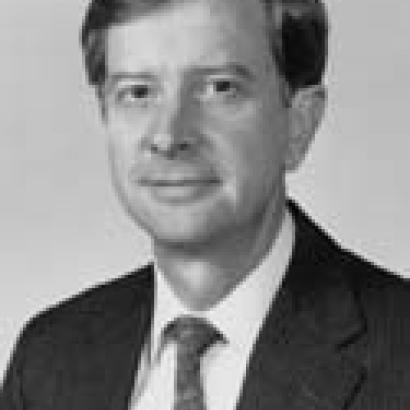
Charles G. Palm
>> Charles Palm: When the Soviet Union collapsed in 1991, we sought to make the Soviet archives available to everyone without restriction. Over 10 million pages of previously unseen documents were microfilmed and made available to scholars around the world. When the Soviet Union collapsed in 1991, the new Russian government opened the Soviet archives to the world for the very first time.
As Deputy Director of the Hoover Institution at the time, I saw this as an opportunity. After contacting the newly appointed head of the Russian Archives, we proposed a collaborative, ambitious project to microfilm and publish the newly opened records. Together, we sought to make the Soviet archives available to everyone without restriction.
By 2004, we had achieved our goal. Over 10 million pages of previously unseen documents were microfilmed and made available to scholars around the world. A massive trove of Soviet government and Communist Party records. The records detail, among other things, countless Soviet crimes. Among the most notorious of these crimes was what is known as the Katyn Forest Massacre, in which over 21,000 Polish officers and civilians were shot to death at three sites in the western USSR, including at Katyn.
The massacre took place in the spring of 1940. The victims included Polish army officers, civil servants, teachers, doctors, lawyers, landowners, police officers and ordinary soldiers. Each of the victims was killed with a bullet to the back of the neck. Only after the fall of the Soviet Union in 1991 would the Russian government reveal the full truth about Katyn in the form of official documents.
These included what is considered the smoking gun document, a letter dated March 5, 1940, labeled Top Secret from Lavrente Berio, the head of the NKVD Stalin State Police, to Comrade Stalin, suggesting the supreme measure of punishment shooting for the captive Poles. Near the top of Beria's letter, Stalin wrote the word "Za", meaning in favor, and signed his name, as did other Politburo members.
Hundreds of scholars have come to the Hoover Institution to use the microfilm collection. They have published dozens of scholarly works based on them. One outstanding work, the Pulitzer Prize-winning book, Gulag by Anne Applebaum, chronicles the history of the Soviet forced labor camps, what she has called the quintessential expression of the Soviet system.
As policymakers in the West adapt to the new and threatening challenges coming from Russia, we all stand to benefit from the objective histories made possible by the opening of the Soviet archives and the Hoover project that copied them and made them available for all to see.
Videos
Charles Murray joins Peter Robinson to discuss the evidence that forced him to reconsider God, the soul, and Christianity.
August 17, 2026 • 66 Min Watch
Articles
What if the Industrial Revolution began not with steam, but with property rights?
August 17, 2026 • 72 Min Watch
Videos
H.R. McMaster and Ine Eriksen Søreide discuss what it will take for Norway to protect critical infrastructure and preserve democratic resilience in this more dangerous European security environment.
August 13, 2026 • 48 Min Watch