For most of his life, Charles Murray was a casual agnostic who assumed smart people had left religion behind. Now he’s not so sure. Murray joins Peter Robinson to discuss the evidence that forced him to reconsider God, the soul, and Christianity—from near-death experiences and the mysterious Shroud of Turin to the historical reliability of the Gospels and the Resurrection. It’s the story of an empirically minded skeptic following the evidence wherever it leads—and discovering that faith may be far more reasonable than he once believed.
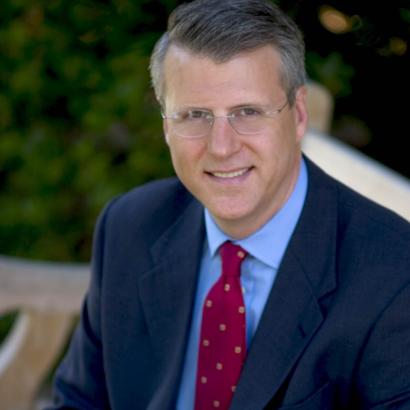
- What happens when a man finds himself beginning to doubt his atheism? Charles Murray on "Uncommon Knowledge" now. Welcome to "Uncommon Knowledge." I'm Peter Robinson. A graduate of Harvard, Charles Murray spent four years in Thailand with the Peace Corps before earning a doctorate in political science at MIT. He has been a scholar at the American Enterprise Institute for some three and a half decades. Dr. Murray is the author of a number of books, including his classic work on welfare, "Losing Ground," and his intensely controversial book, "The Bell Curve." Dr. Murray's latest book, "Taking Religion Seriously." Charles, welcome.
- I'm so happy to be back in the program.
- "Taking Religion Seriously," "My meandering pilgrimage," I'm quoting, "My meandering pilgrimage to belief has been devoid of divine revelation. It's been a more arid process, but it has been rewarding. And if you're like me, it's the only game in town." Charles, you're a graduate of Harvard. You can't talk like this. Religion, the only game in town? What do you mean? What do you mean?
- Oh, what I mean by that is there are millions of other people out there like me who are basically handicapped, which is to say... Well, let me back up a little bit. I think that something that casual agnostics, which is probably the best way to describe me before, are guilty of is thinking that the people who say that they have these deep spiritual experiences are making it up, and what's really happening, I have concluded, is that there is a quality called spiritual perceptiveness, in the same way that a professional musician hears music differently from the way I hear music. There are people who are not only tone deaf, there are people, of course, who are colorblind, and they have to take on faith, as it were, that the colors red and blue and purple and so forth actually exist. Well, in the case with spirituality, I think it's the same thing. That it, pardon the expression, forms a bell curve, with some people who are very high on it.
- You can't help yourself.
- I got to know. Some people are very high on it and some people are very low. And I think if you expressed my spiritual perceptiveness in the IQ metric, it would be 75, 80, somewhere around there. So the short story is this. This is a book by a guy who has no natural talent for this, but who had come to realize there is something there that I wanted to tap into, having watched my wife tap into it, and this is how I went about exploring it.
- I am speaking to the author of one big, important book after another, "Losing Ground," this is the 1984 book that changed the way everybody in the country thought about welfare. "The Bell Curve," "Human Achievement," "Coming Apart: The State of White America," that's the 2012 book that all but predicted the politics that we're experiencing today. Now, each of those volumes, I'm giving you my view as a layman, but as a reader of yours, each of those volumes was really very intellectually audacious, but there was a certain tone of audacity in each of those books. Charles Murray said in "Losing Ground" and in "Coming Apart," "You'd better read this book. I'm writing about something important. It so happens that I happen to see it better than anybody else, and if you don't read this book, you really don't have much of a right to talk about the subject." That was sort of the implicit, and the books were so weighty that you actually pulled it off. They really did change the conversation on important topics in the country. This is completely different. This is like an extended letter to a friend. It's warm, it's candid, it's modest, and here and there, it almost feels a little embarrassed about itself. Why has the thunderer become so diffident?
- Well, I would like to think it's because I know when I don't know what I'm talking about. So with something like "Losing Ground," I was writing about topics which had been my career for 10 or 12 years before that, plus a lot of other reading, and I knew a lot about my subject. And so I wasn't afraid to go ahead and sound that way. I'm tickled by the fact that you perceived it because I didn't intend for that tone to be in there. But the same is true of IQ. I know a lot about IQ. And so if you come up to me and you want to spout the usual objections to IQ, my first reaction, if I were being entirely candid, would be go away and do some homework and then come back and then tell me what you want to do. This is different. When you are taking religion seriously for the first time, you are getting in to some of the most incredibly deeply researched, controversial topics anywhere. Makes the IQ debate look trivial in terms of the six-year quantity of the scholarship that has gone into the study of the scriptures, for example, or that has gone into theology more generally. I've just scratched the surface of that, but that has to be true of anybody who is taking religion seriously for the first time. So essentially what I'm saying to my reader is, "Okay, I'm saying you're probably like me in terms of a lot of your background and your perception, suppositions, and so forth. Here's how it worked for me, but don't take my word for it that I'm right about all this stuff. I'm just giving you my considered judgements as an amateur."
- So I'd like to return if this notion, we'll come to the arguments that you have found persuasive as you have worked your way through, over many years, a great deal of material, but your starting point, I'd like to return to this idea of the perceptual deficit. That's your term. You went to church when you grew up in Newton, Iowa, but then, and I'm going to quote from "Taking Religion Seriously," "I went off to Harvard, where I was thoroughly socialized to be secular. When the topic of religion came up, professors and friends alike treated it dismissively or as a subject for humor. I fit into the zeitgeist." Well, how can this be? Harvard is founded by believers.
- Yes.
- It's founded to teach men in the 17th century. It's founded in the 17th century to teach men to preach the truth. Veritas is the motto of Harvard University. And you go there and the first thing that happens is, well, this question, is there or isn't there a God? How vulgar? That's not an interesting question. How could this be?
- Peter, I think that probably goes back to the early years of the 20th century. I don't know that for a fact.
- The notion of the zeitgeist doesn't take it seriously.
- There was just an enormous secularization of the intellectuals over the course of, well, throughout the Enlightenment, but especially in the late 19th century. And there was a great deal of confidence that what we were looking at with religion was a God in the gaps, whereby things that human beings didn't understand before thunderstorms or whatever, they ascribed to God, and we don't have to do that anymore because we understand so much, and sooner or later, we will understand everything. But my wife put it perfectly. She often does with lots of topics. She says, "I went to college and I learned that smart people don't believe that stuff anymore."
- Okay, so this is a book about you, but this question of the perceptual deficit might, your point might become even sharper if I tell you just very briefly about my slightly parallel experience. You went off to Harvard, an August institution. I went off to Dartmouth. I dare not consider what you thought of Dartmouth at Harvard, if you though of it at all.
- You had way more fun than I did.
- We did have more fun. I'm sure we had more fun. But I encountered the zeitgeist. I remember as a freshman realizing that the cool people didn't believe in religion. I tried to be an atheist. It lasted two weeks. I remember it distinctly from leaving church one week, trying for two weeks, and I kept having to remind myself- Not to believe.
- Beautiful autumn, the turning of the leaves. No, no, no. This is simply the result of the random whirling. I couldn't not believe in God. And I remember, at the end of two weeks, I said the hell with it, and I went right back to church. So we are just on opposite ends of the bell curve. I can't not believe it. Now, I've not been a good person. I've not believed in the way I should, but the notion that something is there has seemed obvious to me all my life.
- And I can't tell you how much I envy you, because there is no sense, and I don't think that, I think the book makes this clear, in no sense do I think that my way of going about this is the preferable way. Your way is by far the preferable way because it's called the gift of faith for a reason. That I can dispassionately look at a lot of evidence and say, "Here is the plausible explanation, as far as I can tell, the most plausible explanation," that doesn't mean that it's accompanied by the sense of faith that you are able to tap into. I am hoping that someday the veil will lift. And it could do that, but maybe I have to die first. Who knows?
- All right, so you divide the book, "Taking Religion Seriously" into two parts, first taking God seriously and then taking Christianity seriously. So let's begin at the beginning. From the book, "It was Catherine," this is your wife, "It was Catherine who had the epiphany that set things in motion. During the first few months after the birth of our daughter, Catherine discovered that she loved Anna," and here you quote your wife, Catherine, "Far more than evolution required." That's so beautiful, I almost don't want to continue the show, but of course, tell me what you mean by that.
- What she meant by that.
- What she meant by that.
- She does have a way with words. She's a smart lady. MPhil from Oxford, PhD from Yale and all that, so she's a member of this tribe of smart people, and she understands evolutionary psychology. She understands that you're more likely to pass on your genes if you love your baby, if you're a woman. She knows all that, and she was saying, "Yes, we are, through evolution, inevitably drawn toward loving our babies. I was feeling something for which I was a conduit, something greater." And this greater love that she was experiencing said it pointed vaguely to God, and she acted on that and went off and started to look for a religious tradition in which she could pursue this.
- All right, so it begins with Catherine and the birth of your daughter, Anna, and then you write about a series of what you call nudges. Now, the book is a brief book. I want to stress that it's accessible. People can pick it up and read it in a weekend happily. But it's still a book, so of course, we have to compress matters for this conversation. One of the nudges was the way mathematics, which is, of course, an immaterial reality, fits with physical reality so well. And here, Charles, we flip places. Math has never mattered to me in any way whatsoever. I know friends who find just this point, math, the existence of math suggestive of something profound about reality, and I just don't get it, but tell us what you meant.
- That it doesn't make sense that so many physical laws should be so mathematically simple. There is no a priori reason that we should say that E equals MC squared, not as an approximation, but as a very precise statement. There is no reason that mass times acceleration should be one of the basic laws of motion. It would make much more sense if they were kind of like pi, which never resolved forever. And yet again and again, at various levels of math, there is an elegance and a beauty in the way that the physical world goes by mathematical rules. And you say to yourself, again, this was not a huge nudge, it's just pretty damn strange. It's as if somebody planned it that way, and that was the first time I started to think in those terms, but it didn't push me very far.
- From the book, again, "As far as I can tell," this is you writing, "As far as I can tell, all the cosmologists' explanations about the origin of the universe are implicitly saying, "I'm going to ignore an initial miracle and explain everything else.""
- You, at some point, had to have a creator of the universe. I mean, that seems to me, once you stop to think about it, an inescapable thought, it does not come from nothing. And it's the phrase, "Why is there something rather than nothing" that can get you started on that? And I'm aware, and I've read the learned books that give the arguments that, no, there doesn't have to have been a creator, and a couple of them were quite well-written and accessible. I could understand the math in them and so forth. They just were not persuasive to me. But of course, the other problem is once you say there's a creator, then they can say, "Well, but who created the creator," and so forth. And here's the point at which I think you should go back to another truth that I came to over a period of time: God is essentially unknowable in any serious, detailed way. We can apprehend very little about God, and for us to say, "Well, there has to have been another creator" is to simplify, to anthropomorphize God, and you are confronting a mystery here that I think you have to acknowledge.
- All right, you write, this is tricky, tricky material, but you write a lot about paranormal phenomena, near death experiences, terminal lucidity, this phenomenon in which people whose minds are gone, and it has been physically established that the minds are advanced dementia, and in the day or hour before they die, they suddenly come back to themselves and are present and able to converse for some period of time, not a long time, and then they're gone. "Evidence that consciousness can exist independently of the brain needs to be taken more seriously than the scientific establishment has been willing to do. If I am not just a brain and a body, what am I? I had to acknowledge the possibility that I have a soul."
- If I was to say to people, to my fellow casual agnostics, what is the evidence that you must come to grips with? And I would say it's the evidence of consciousness existing independently of the physical brain. Because I can
- That's the big one for you.
- Yeah. For me, because that puts everything on the table religiously. As long as I can maintain a materialist position about the human, I'm very limited in the things I can plausibly say about the divine and the divine's relationship to human beings. We are just meat that dies and decays. Once you say, "Forget about God for a minute, just take this as empirical evidence that you subject to the ordinary standards of plausibility, of replicability, and so forth," I am suggesting to you, you cannot dismiss all of this. There are simply too many well-documented cases out there which do not seem to admit of any explanation except consciousness existing independently of the brain. And once you get over that hump, as I said before, everything is on the table about sin and redemption and a personal God and the rest of it.
- Since the book came out, you've come under this assertion, that one. Your fellow casual agnostics seem to be especially sensitive to that very assertion.
- Yes.
- Because boy, have they fought back on that one. Harvard's Steven Pinker published a column in the Wall Street Journal headlined, "Charles Murray's Unscientific Case for the Soul." How do you answer Steven Pinker? Has anybody persuaded you that you may have been mistaken or that you overstated the case?
- I would simply say... By the way, I like Steve Pinker.
- Yes, you're friends or you're colleagues.
- We're colleagues. We've been good acquaintances for years and years, and I admire his work, okay? So what I'm about to say-
- This is one of the few academic disputes that isn't nasty.
- Yes, but what I want to say is in the context of that larger admiration and affection for Steve Pinker, which is his column sounded to me like see no evil, hear no evil. He did not confront the bodies of evidence that I was referencing, and furthermore, he characterized them as being, oh, with terminal acidity, people will grasp onto any glimmer of evidence, of rationality, or so forth. But the evidence I was citing was of people who had specific memories of the other people in the room, the spouse they hadn't recognized for years, their children, memories of friends, the personality characteristics. We're talking about, in some cases, about an hour or so of these people being back, and Steve simply is not willing to acknowledge that those data, which have been collected by serious people under serious safeguards, need to be taken seriously. And so I'd say to Steve and to his colleagues who feel the same way, you guys have got to look at the evidence. You can't just assume that it's all fluff and hallucination.
- All right, taking Christianity seriously. Now, there's a lot of argument in here. So if I may, I'll summarize a bit, and if I make a mistake, if I get something wrong or place the wrong weight on some, correct me. But you ask fundamentally two big questions. Question one, when were the gospels and the episcopals of St. Paul composed? And where you review the evidence, and I have to say, I've read a little bit of this material and I know it is extremely complicated and there's a great deal of close reasoning, and it's footnote after footnote as one scholar refers to another scholar. And your summary is just masterful because it is so simple and accessible, and yet I have some sense of the erudition behind it. You review this evidence and you conclude that the gospels were composed very soon after the crucifixion, perhaps as little as 20 or 30 years later. By the way, I thought to myself, "Ronald Reagan left office," I'm mentioning this because you and I can both remember the '80s in this town. We were young men here in this town. Ronald Reagan left office more than 35 years ago, and you and I can both remember those years and him vividly. We could sit down and give accounts that would be truthful. All right. Question two is, are the scriptures historical? Not when they were composed, but do they relate events that happened? And your conclusion here?
- In a surprising number of ways, the scriptures fit, they sound very much as if they are the testimony of eyewitnesses who are not making a story to fit a preconceived pattern, but they're telling a story that is artless, but that dovetails with other collateral evidence. That's a little vaguer than I should make it. I'm speaking about very specific kinds of accuracies and geographic accuracies.
- Geographic knowledge.
- Geographic knowledge and something that these undesigned coincidences that in the scriptures, well, there are separate.... This is my favorite. There are separate discussions of Mary and Martha.
- Hold on. I found that so striking. Oh, yes, here. I found that so striking, Charles, that I printed out the two separate accounts.
- You did.
- I'm going to read one and you're going to read the other, and then you tell me the significance of these two accounts. And it is important to note that one of these comes from Luke and the other, oh, fool that I am, I forgot to write down.
- John.
- John, of course. Okay, one is from Luke and the other is from John.
- So it's not one of the synoptic gospels.
- Correct.
- Yeah, with John.
- Matthew, Mark and Luke, there is an argument that they have a similar source. John, nobody argues that he has the same sources. All right, so Luke, 10:38 to 42. "Now as they went on their way, he entered a certain village, where a woman named Martha welcomed him to her home. She had a sister named Mary, who sat at the Lord's feet and listened to what he was saying. But Martha was distracted by her many tasks, so she came to him and asked, "Lord, do you not care that my sister has left me to do all the work by myself? Tell her to help me." But the Lord answered her, "Martha, Martha, you are worried about many things. There is need of only one thing. Mary has chosen the better part, which will not be taken away from her."" That's Luke.
- And this one is Lazarus. Their father had died.
- Their brother.
- A brother, I'm sorry, had died. And so they are waiting for Jesus, who they've sent for. "When Martha heard that Jesus was coming, she went to meet him, and while Mary stayed at home. Martha said to Jesus, "Lord, if you had been here, my brother would not have died. But even now, I know that God will give you whatever you ask of him." Jesus said to her, "Your brother will rise again. Do you believe this?" She said to him, "Yes, Lord, I believe that you are the Messiah, the Son of God, the one coming into the world." When Martha had said this, she went back and called her sister Mary and told her privately, "The Teacher is here and is calling for you. And when she heard it, Mary got up quickly and went to him." All right, those are the same two women.
- Those are the same two women. We are talking about events that happened 2,000 years ago that were recorded by different people in different places, and we have one officious bustling, "Tell her to help me." "Jesus, if you'd gotten here when I first called for you, this would never have happened." This is the same person.
- Rebuking Jesus takes a little chutzpah, I think.
- And then in Martha, we have this simplicity and this devotion. In one story, she sits at his feet. In the other story, the moment she hears that he's there, she takes off... It is astonishing.
- Well, I think it's a good to introduce here what I am reacting against when I did all this reading and writing about it, which is the revisionist histories, which essentially say, and by the way, this is the dominant... You go to most divinity schools these days where requirements do not include belief in God, and this is what you're going to be taught. The scriptures of the New Testament were not even really written in the ordinary sense of that word. They were like a game of telephone, where the kids whisper to each other and that goes around the circle, only as one of the leading authors of the revisionist says, it was spread over 3,000 miles over the entire Roman Empire. And people were augmenting and redacting, and this went on for decades, and so what we have now bears no necessary relationship to anything historical. Well, I've just given you a couple of reasons for saying there are odd ways in which they're historically accurate. But a scholar named Richard Bauckham has done a very deep dive into Palestinian Jewish names, and it turns out that the popularity of Palestinian Jewish names in the first century was not at all the same as the popularity of Jewish names in other parts of the empire, and so if you were sitting in Rome and making up stuff about a cast of characters in Palestine, the chances you would come up with the right names was really rather small. And the degree to which the names just exactly dovetail with the actual Palestinian names, that's very interesting quantitative data brought to bear on a biblical question.
- Yes, and this is almost asking a literary. You're reading a text there and saying, "Wait a minute, wait a minute, I recognize this woman." And your conclusion is what? This is literature of such a high order that somehow or other the authors are in sync? Or is it simpler simply to say, "No, no, no, there really was a Mary and a Martha, and they had these personalities so distinct that we feel them in two different accounts. They were real. This happened."
- You and I are giving the people watching us reasons to say, "This stuff is not boring." As the two of us are indicating, this is fascinating, these various historical arguments. And I will tell you with the dating of the gospels, I went to more recent sources, still the mainstream scholarship. The mainstream scholarship says none of them were written before 70 AD, and they may have been written much later than that. And so here, I'm this amateur. I recognize I'm an amateur. And I'm still saying to myself, the evidence for post-70 seems to be very, very wispy. And the evidence for pre-70 seems pretty doggone plausible.
- One more piece that I've just found so striking. I'm embarrassed at the number of arguments that you presented that hadn't occurred to me or that I hadn't come across. But you see that embarrassment is just a demonstration of my pride anyway, so nonsense, but the end of Acts.
- Yes.
- Explain that one.
- The last chapter, well, for the last chapter of Acts, you've had Luke and Paul go to Rome.
- By the way, Acts is, every scholar, even those who doubt that it's historical, gives us much historical insight. Take it as given that Acts and the Gospel of Luke were written by the same author, that essentially, Acts is a continuation of the story we see in Luke.
- Yeah, and so that sets up. And Luke was also thought to have had access to Matthew and to Mark. And so Luke presumably came after Matthew and Mark and the Acts came after. Well, this all becomes important because in the end of Acts, they've arrived in Rome, and the very last verse is to the effect that Paul remained in Rome for two years, renting his own place and preaching with all effectively and with no drama whatsoever, that's the end, the end.
- Paul is still alive.
- He's not only alive, but preaching in Rome and everything's hunky-dory. Well, about four or five years later, you had the persecution of the Christians and Paul was martyred. If Acts was written in the 70s, why doesn't Luke say that, that he was martyred, especially since if he was writing later, he could have presented that as evidence of the ultimate triumph of Christianity as they got over that? Also, Luke, in other parts of his writings, was very comfortable talking about things that were prophesied, that came true, and so forth. Why didn't he mention that Paul was martyred?
- Because he wrote it before Paul was martyred.
- He finished it.
- It really is the only possibility.
- It's a biography of a man who hasn't died yet, and so it has to end where he leaves off. So that is, to me, by the way, I'm not alone in this. One of the most renowned Christian scholars at the turn of the 20th century who had earlier dated these gospels much later, finally, Acts drove him nuts.
- It bothered him all his life.
- And then 20 years later, he comes back and he says, "I just cannot. I cannot explain this failure to mention the martyrdom of Paul, except by saying he hadn't died yet."
- It would be like writing a biography of Abraham Lincoln and leaving out Ford's theater.
- Exactly. Exactly.
- All right, the resurrection. You begin with known historical facts. And by the way, you explain how we know them from other non-biblical sources, Josephus and so forth. Jesus was a historical figure. He was crucified. Within just a few decades, Christianity had indeed spread around the Mediterranean world. The evidence of that is overwhelming. "Taking Religion Seriously quote," "The implication is that something transformative happened to Jesus's followers after the crucifixion. Coming up with a description of that something that doesn't look like a resurrection turns out to be harder than you might think."
- There is so much, again, I will use the word fascinating scholarship that has been done on the resurrection, and all of your glib answers are very hard to defend. The glib answer, "Oh, the disciples stole the body away and claimed that he had risen." That has so many assumptions about the psychology of the devastated disciples in the hours after the crucifixion, so many assumptions about the ability to pull off a plot like that, so many assumptions about, gee, virtually all of the disciples went to their deaths, often gruesome deaths under torture, where they were supposed to recant. Not one of them ever recanted. They told this lie.
- They went to their death for a lie.
- Telling that lie, yeah. So that's just one example of something that you would initially think can be used to brush away the resurrection that turns out to be harder than you think. But the problem, of course, of the resurrection is we're not just talking about feeding the 5,000 here with a few loaves and fishes. We're talking about
- This is the big one.
- A mammoth, mammoth miracle that occurred. And here's the point at which I said to myself, "Charles, do you really want to talk about the Shroud of Turin?" And Catherine, when she read the draft, she said, "Charles, do you really want to write about the Shroud of Turin?" And I guess I'm old enough now that what the heck? I mean, why not?
- All right, the Shroud of Turin, a fabric. I'm trying to summarize so you can take it from there, but I'm not sure I can summarize it adequately. How to be very brief. It's a large fabric that comes into the historical record unambiguously. It's first documented, as I recall, in the 1300s, I believe, around that time. And it shows, very, very faintly, the image of a man, arms crossed, seems to be the case that, or looks as though it was a burial shroud of some kind, and it has been, for a century or so, owned by the former Italian royal family, the House of Savoy, which keeps it in a chapel in Turin, Italy, hence the Shroud of Turin.
- Right.
- Take it from there.
- Okay, so in 1898, it is the first time that a photographer is allowed to photograph the shroud. The shroud is a long, narrow strip of linen that basically is draped over the bodies, the back, and then the front.
- So you get front of the figure and back of the body here.
- Yeah, yeah, back of the body too with one long strip of linen.
- Right.
- And the image is very faint, very faint. And you can go online and look at what it looks like ordinarily, and also online, you can see what shocks everyone in 1898, which is the negative of the photograph. The negative shows an incredible amount of detail, right down to the details about there were coins put in the eyes of the body and they can identify what the coins have been. Well, this detail-
- And it was dimensional as well.
- It's dimensional as well. It is. Well, let me back off for a second. I'll just finish the-
- Go ahead. The detailed image that comes from the negative conforms exactly to the account of the resurrection, of the crucifixion, the crown of thorns, the wound in the side, and the rest of it conforms so completely accurately, "Eh, that can't possibly be-"
- Got to be a forgery. Too good.
- And also, people, some watching us saying, "Wasn't that proved by carbon dating to date to the Middle Ages?" And the answer to all of this lies to the fact that in 1978, there was a group of hard scientists for very prestigious places, Los Alamos and the academic departments of major universities that were allowed to examine the shroud and to do a wide variety of chemical tests on it and other kinds of tests, and their task was to determine how the image was formed. And the lead author of the technical article from the report of their research also has published an article about the carbon dating with very persuasive evidence that the piece that was used for the carbon dating was not part of the original shroud. So that's still up in the air. There is an alternative mode of dating that uses cellulose deterioration, which suggests that it's 2,000 years old, but let's not focus on that. This object is so baffling chemically as examined.
- It's not paint.
- It's absolutely not paint. There's no pigment associated with it. It's also directionless, which is to say that any form of putting an image on a fabric, the strokes are going to go in a direction, and it's directionless. Here's the really strange part: a single thread has a whole bunch of fibers in it, and the coloration of the image only goes two microns deep. Microns are a millionth of a meter, okay? So you have, with these tiny, tiny fibers that are only part of a thread, the coloration is at the top part of that fiber and no deeper than that, and at the end of all, this is just one of the many, many analyses, and at the end of it all, the scholars concluded, "We understand what the image is. We haven't even a plausible hypothesis for how it was created. In a way, what we're saying is, "Let's just say it's a fraud. Tell me how you did it.""
- And nobody can answer that question.
- Nobody can answer. Now, there are a whole bunch of other stuff associated with it, which pollen on the shroud, which goes to Palestine and to plants and so forth that don't appear in Europe. There's a lot of collateral evidence, but I guess that I've said my position on the shroud is you have to get past the hardest science about the shroud, and the hardest science about the shroud says this is one weird piece of linen that we cannot explain. And that detailed image that corresponds so closely to the crucifixion, that it got there is a miracle of some sort.
- By the way, I checked on the Catholic church, of which I am a member, has not taken a position on the shroud. It's understood to be worthy of veneration, but the church has not said and will not say, "This was the shroud." But at the same time, we're permitted to venerate it, which seems to suggest that even on the authority that I recognize, but you couldn't begin to recognize, and we'll come to that in a moment, we're permitted to imagine that this was the burial shroud that lay on that body the moment something happened that transformed dead flesh into a living person once again. And that that something that happened left a trace that we cannot understand, but that we can see today. Correct?
- And this is the reason I eventually put this material in here, that I'm not doing it so that I say, "Gee, you've got to believe on the basis of this." No, I'm not saying that. It's sort of like what I said about the evidence for terminal acidity. You cannot pass this off as gauzy, filmy, feel good analyses of this piece of linen.
- There's something hard and factual here.
- Yeah, you've got to deal with the very strange characteristics, inexplicable characteristics of this piece of cloth.
- "Taking Religion Seriously." "For the last 30 odd years, I have spent the better part of an hour awake every night." By the way, I can't tell you what a relief it was to read that because I wake up at about 2:00 in the morning. I put it to less use than you. "I spent the better part of an hour awake every night, usually around three in the morning. During one such wakefulness, I was thinking about what it would be like to meet great religious figures, such as Guatama, Laozi, Moses, and Jesus. It came to me that I would treat Jesus differently."
- It came to me, and I think I used the word unbidden, it just came to me, I would treat Jesus with reverence. And that's true of so many of the things that have happened over the years. We're talking about an evolution that started at the birth of Anna in 1985 and has been continuing ever since, and so it's been a long period of time. And most of the things that I am been surprised by is I have not consciously changed my mind as I went along, and when I said I've not been given the gift of faith, I'm serious about that, but there's also never a time when I said to myself, "Well, you ought to feel a certain degree of reverence for Jesus on the basis of your work, of your studies." But all at once in the middle of the night, I realized I did feel it. And I hadn't concocted it. It was just there.
- So that was a little bit of a burst, wasn't it?
- Didn't you get just a little touch of inspiration?
- Oh, yeah, and so I'm not a completely hopeless case.
- All right, Charles, you spent four years, if I have it correct, in Thailand. Early, early, early .
- Six.
- Six years in Thailand in the Peace Corps. Why not Buddhism? You're aware, well aware of other religions. Why Christianity? Why is part two "Taking Christianity Seriously" instead of taking Buddhism seriously?
- It's basically because of a guy named Pete Wehner, who was formerly an aide to George W. Bush, speech writer, and he is an evangelical Christian, and I was having lunch with him at the White House mess, as it happens, back in the 2004 or 5. And I asked him about his religion and how he came to be an Evangelical Christian. And he said, "Well, mostly by convincement." And he said C.S. Lewis' "Mere Christianity" played a big role. And I went out and bought "Mere Christianity," and it's a really powerful book. If you want to know that some smart people still do believe that stuff, C.S. Lewis is your guy to read. He's really smart, and he is making a case where you find yourself arguing against him, and then the next paragraph, he responds to the argument that you had come up with. That had a big influence on me and that got me started on all this. The second thing that got me started, because at this point, I already had decided I believed in God, so I'd gotten that far, but the other thing was a book by this Richard Bauckham, who I mentioned earlier called "Jesus and the Eyewitnesses." It's a very long, ornate book.
- I know that because I read it after reading your reference to it. It is long and it is dense.
- It's very learned, but its argument, its thesis is simply, there's a lot of evidence that these were eyewitnesses. These are eyewitness accounts, and they were done with sufficiently close links to the people who told the stories that they could be trustworthy. So for example, Mark, he says Mark is taking down Peter's testimony basically, and so that one also was something that responded to the revisionist theories, which I had already read and I assumed were right. And I've always been a little bit of a contrarian, and so if the conventional wisdom is the revisionists are right, I suppose that it's natural that I would've liked the contrarians, but I think the contrarians have the better part of the argument.
- "We live at a time when the relationship of religion to science has shifted in ways that require nonbelievers to reconsider their position."
- Yes, in a couple of different respects. One of them is the thing that we've talked about, not very much, about the unlikelihood of a universe that permits life.
- The fine-tuning art.
- Yes, the fine-tuning of the universe, which is not scientifically controversial. It is simply taken for granted that the parameters that this universe has that permits galaxies to exist, stars to exist, everything that permits life to exist, is a very incredibly unlikely event. By unlikely, I mean trillions to one. And it's much more probable that we would live in a universe that's nothing but black holes or we live in a universe in which you have radiation, but no solid bodies at all. And so that's scientifically a fact, and if you wonder where multiverse theory came from, the theory that there are actually millions of universes out there, that's where it came from. Because unless you come up with the multiverse theory, you are being asked to accept that we happened into a one-in-a-trillion chance to live in a universe that permits life. I don't believe in one-in-a-trillion chances. It seems to me a much lesser leap of faith to say the universe was created intentionally to permit life than to say we we hit a one-in-a-trillion lottery ticket. And the multiverse theory, here, I'll just be a Philistine and be done with it, the idea that there is more than one universe just seems silly to me.
- I remember Polkinghorn. Who was he? He's the great physicist.
- Yeah.
- Polkinghorn, somebody was going on about multi. I think he's dead now, but this was years ago. Somebody was challenging him with a multiverse theory. And he said, "Well, the first thing to be understood about the multiverse theory is that it contains not one shred of physical evidence. It's pure mathematical constructions. It's purely mind spun," was his point.
- Yeah.
- Which is true still.
- Right, but you know what? If you don't come up with a multiverse theory, the religious implications of the unlikeliness are very hard to get around.
- So you began the book by saying that when you went off to Harvard, "I fit into the zeitgeist." Is it time for a new zeitgeist? I mean, when Katherine says I learned, she learned when she went off to college that the smart people don't believe in that stuff anymore, do the smart people need to think again?
- I think that there's something in the air. Think about 2003, 2004, 2005, Richard Dawkins and Christopher Hitchens were rock stars.
- [Peter] Yes, they were.
- In terms of their intellectual standing and their fashionability, and an aggressive atheism, which Dawkins just relished saying, "The universe is pitiless, cold." Well, and heaven knows Christopher Hitchens liked to turn a good phrase too. So Christopher's
- Huge book, he was delighted by the sales of "God is Not Great." Remember, that was the name of his atheist.
- He also went after Mother Teresa. Anyway, aggressive atheism was on the rise, and it's not anymore. Instead, you have in the New York Times op-ed page, Ross Douthat, a devout Catholic who was not shy about mentioning that. Until recently, you had David Brooks, who's become converted to Christianity. You have over at the Atlantic, you had Arthur Brooks, a devout Catholic, you have a lot more people who are visible now who are openly religious, but also fully qualified public intellectuals. And recently, Ayaan Hirsi Ali and Niall Ferguson have announced similar kinds of things. For that matter, you got me writing this book. So on the one hand, we have really depressing statistics about the fall and church attendance, about the increase in the percentage of Americans who put down nothing when they're asked what their religious beliefs are. And on the other hand, you have this odd renewed interest in religion among some public intellectuals that was not true 20 years ago. So it is possible that the zeitgeist can change just because, particularly with universities, it has in the past changed so fast.
- I have to say, I wonder if you, in talks with friends, particularly younger, the Rosteldt and down generation, so to speak, my own experiences, I've read more, I mean, I've been reading, I'm pretty far along in life here, but I think back to that zeitgeist that you mentioned, which was a little looser at Dartmouth because we were at least permitted to have fun, but you at Harvard all took everything so seriously. And I find myself reading an Aquinas. Wait a minute, here in the 13th century was a man who was undoubtedly a genius and he dedicated his life to this stuff. The discovery of Augustine was a big one to me. Here, we have his Rome falls. This man, his heart is broken. He loves all that Rome stood for. He's watching across the Mediterranean from North Africa, and he sits down and writes this long meditation on what is ephemeral and what is eternal and it's called the City of God. And it's a gigantic work, spiritual of the intellect and the spirit, and I think back to the zeitgeist that I encountered and think, "You bastards, you were holding out on me. You knew and you covered it up." There's a little pleasure of discovery, but also a little anger in me at least. Do you feel that? Am I talking nonsense to you or do you know what I'm saying?
- No, because I feel exactly the same way about Aquinas that you did, that this man is just a genius, and he also opened up, I mean, he's probably largely responsible for the Renaissance in some respect.
- Yes, yes, he brings in Aristotle. Yes.
- By the time we got to college, I went in the fall of 1961, you're younger than I am, you went somewhat later.
- I went in '75.
- Yeah. It was so taken for granted then that you didn't have to take religion seriously, that I seriously doubt whether, and many of the faculty members at Harvard had read Aquinas, I think it's quite possible that, outside the philosophy department maybe, that any of them had ever come to grips with the erudition, the wisdom, and the rest of it of the Christian edifice. I'm speculating because there are people who turn out to be religious that you didn't realize that they were, but as far as I can tell and reconstruct, universities in at least the last two thirds of the 20th century have been resolutely secular, with the exception of ones that are.
- And it's changing?
- Well, you hear... Look, I'm very pessimistic about the universities, and so I will say briefly that I think the social sciences and humanities are almost beyond repair. I cannot see our way back from the degree of corruption that exists in them, but that's another topic.
- All right. Next book. Faith and the country. We're coming up on the 250th anniversary of the Declaration of Independence. May I quote? Here's an essay from William F. Buckley, Jr. "The sermon Martin Luther King preached at the Ebenezer Baptist Church three months before he was killed closed," and here, he's quoting King, "If I can do my duty as a Christian ought, then my living will not be in vain." "George Washington," Bill continues, "George Washington would not have been surprised by Dr. King's formulation." Now, he quotes Washington. ""Reason and experience both forbid us to expect that national morality can prevail in exclusion of religious principle,"" close quote. George Washington to Dr. King to Bill Buckley, these are formidable figures.
- Well, but you could add to those John Adams, Thomas Jefferson, the famous dias.
- Explain this.
- Thomas Jefferson said that he doesn't think that a free society can exist in the absence of religious belief.
- So we hear now a lot about the administration is saying that we're going to dedicate this, I'm paraphrasing, I don't want to put words in Donald Trump's mouth, but we're going to dedicate this great anniversary that we now are approaching to reclaiming American principles. We had better reclaim something like religious faith or belief or under.... What do you think? That's hard.
- I'm conflicted on a couple of ways. One is, do I think the founders were correct as a pragmatic political science matter that a free society must be a religious society because self-government means, first of all, the governing of oneself, and you simply cannot have the governing of oneself in the absence. I don't believe in secular humanism, I don't think it has any ground. I think it's just on shifting sands. So from a purely expedient point of view, I think the founders were right. I think the loss of a religious foundation is deadly for the United States, but I say I'm conflicted because at this point in my life, I'm saying, "You know what, Charles? Stop making the pragmatic case that a free society needs religion and focus on the truth value of religion." And that I think that I had previously been guilty, along with a lot of my fellow observers, in thinking that we had done our duty in making the expedient case for religion, and at the same time, we were being slightly contemptuous of the people who held deep beliefs.
- All right, and now, I remember Midge Decter's wonderful phrase, that there came a point when she finally realized she had no choice but to join her own side.
- That's Midge. Yeah.
- Is that what you feel something?
- I guess... See, Peter, this book is different from anything else I've ever written, and so what you've gotten me doing the last minute and a half or two minutes is being myself the social policy analyst, and this has nothing to do with social policy analysis and nothing to do with expediency. It is the trying to figure out what's going on here.
- All right, Charles, just a couple more questions and then we'll close because we must. There's one aspect of the book that puzzles me a bit, if I'm reading it correctly. Throughout your professional life, you have been an elaborator, a follower of lines of though to their conclusions, and yet here, you like being mere, "Mere Christianity." I can see this, but I can't see that, but I'll just tell you about what I think I can see. And you don't display much interest in doctrine or dogma. For example, I'll just give you one example that I find in the book and ask why. The Trinity. Now, that's a difficult one, but we have the Trinity. And you talk about a minister who taught Sunday school when you were a boy who was asked about the Trinity, and he asked the children to imagine that they were at the seashore with a jar and asked them to fill the jar with seawater. And then I'm quoting the book, "He said it's the same with Jesus as with the jar. Jesus wasn't God, but he was as much God as you can get into a human jar." Okay, well, it's kind of sweet and it makes a point, but contrast it with the Nicene Creed, which proclaims that Jesus is God from God, light from light, true God from true God, begotten, not made consubstantial with the Father. Now, there we have a statement.
- Yes, we do.
- Okay. Why doesn't the mind of Charles Murray, which, throughout his career, has followed matters out, follow matters out as those church fathers did after 500 years, the Nicene Creeds comes after they've been trying to figure it out for a long time and they come up with this formula. Why doesn't your mind go there?
- Because I'm not competent enough to do it. It's partly temperament. It's partly perceptual deficit. It's partly just the intellectual challenge of, remember what I said earlier, I'm an amateur in all this, and the amount of work that's gone into the Trinity and so forth, but you know what? I guess I retreat here to coming up with things I can get my head around, and when it comes to the divinity of Jesus, I have a hard time thinking of that in a way which makes sense. And is it the ocean that you've got in the jar? No, but it's as much of the ocean as you can get in a jar, jives with my own sense of being in a human condition, and there are things beyond me and outside me that I cannot tap into. What I can tap into is inside the human jar, and so it's a heuristic in a way for me to deal with otherwise insoluble problems.
- Couple more questions. "Taking Religion Seriously," I'm quoting you once again, "I still feel awful about my sins, and I've grown more comfortable with using the word sin. I also have a sense that I have received forgiveness. God's grace has become real to me." Now, you say again and again and again in this book, "I'm sorry, I'm an intellectual. I'm a blind man in a cave and I'm just telling you what I touch."
- That's a good way of putting it.
- But then you say, "Oh, but God's, I feel this. I feel forgiven."
- It amounts to thinking back 20 years to a time that I had been fretting about something I'd done in my 20s, which I was ashamed of and I wouldn't forgive myself, that I should feel guilty about that forever after, and thinking back on that and thinking how silly that is, that for me to set up and say, "I'm the only one who is entitled to forgive my sins." I mean, come on. Was that self-important or what? So why do I feel it's silly? It's because I have had this sense that it's not up to me to forgive myself and that there is something out there that forgives me. It does not qualify as substantial enough for me to say more than I said in the text, has become real to me, and I can't. But you know what? I think that it's important to have truth in advertising, and the thing about the book, what would I like people to take away is I ought to think about this stuff because there's obviously a lot of things worth thinking about and reading about, and Murray hasn't told me anything that I'm persuaded of that I can take and run with, but he has persuaded me that this is a good way to spend my time.
- Last question. What would you say to a kid from small town Iowa, let's say Newton, who's a freshman at Harvard today?
- Don't go to Harvard. Aside from that, that's actually kind of a serious answer, go to a good state university, maybe in the honors program of good state university, but be around a much broader range of people than you're going to be around.
- And worry about the zeitgeist?
- At the University of Michigan, it is true that you have a lot of politically absolutely correct stuff going on there, but the University of Michigan, you also have a big football stadium and you have lots of kids from rural Michigan and you have a very different atmosphere, but if you're asking a question, you've got somebody who's going off to Harvard, well, and I have a grandson who will be going off to school in a year or two, and I guess that I want him to have before him the example of Catherine and me, because he is aware that we do take this stuff very seriously, and in a way, it's not necessary for him to get it sorted out by the age of 22. He will have alternate role models for how to go about this. That's good enough.
- Charles, would you close this conversation by reading from "Taking Religion Seriously?"
- "I began by warning you that my way of taking religion seriously was more arid than I would prefer, and that remains true as I write. Catherine compares her revolving faith to a light on a rheostat that has gradually gotten brighter over the years. Nothing like that has ever happened to me. I have yet to experience the joys of faith. When I'm around Catherine and others who have, I sometimes feel like a little boy whose nose is pressed against the window, watching a party he can't attend. I'm not done trying to join the party. Perhaps the door will open eventually. But even if it doesn't, I have much to be grateful for. My haphazard pilgrimage has already led me to believe that I live in a universe made meaningful by love and grace. That's a lot."
- Charles Murray, author of "Taking Religion Seriously," thank you.
- Been such a pleasure.
- For "Uncommon Knowledge," the Hoover Institution, and Fox Nation, I'm Peter Robinson.