Rose and Milton Friedman Senior Fellow on Public Policy, Emeritus
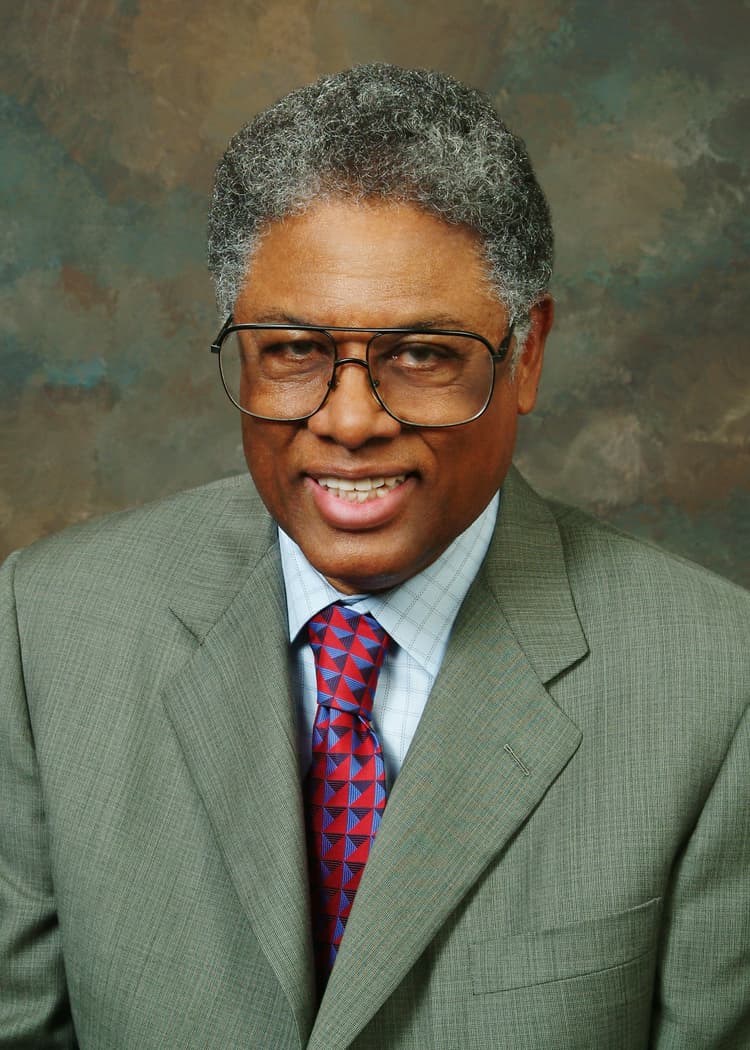
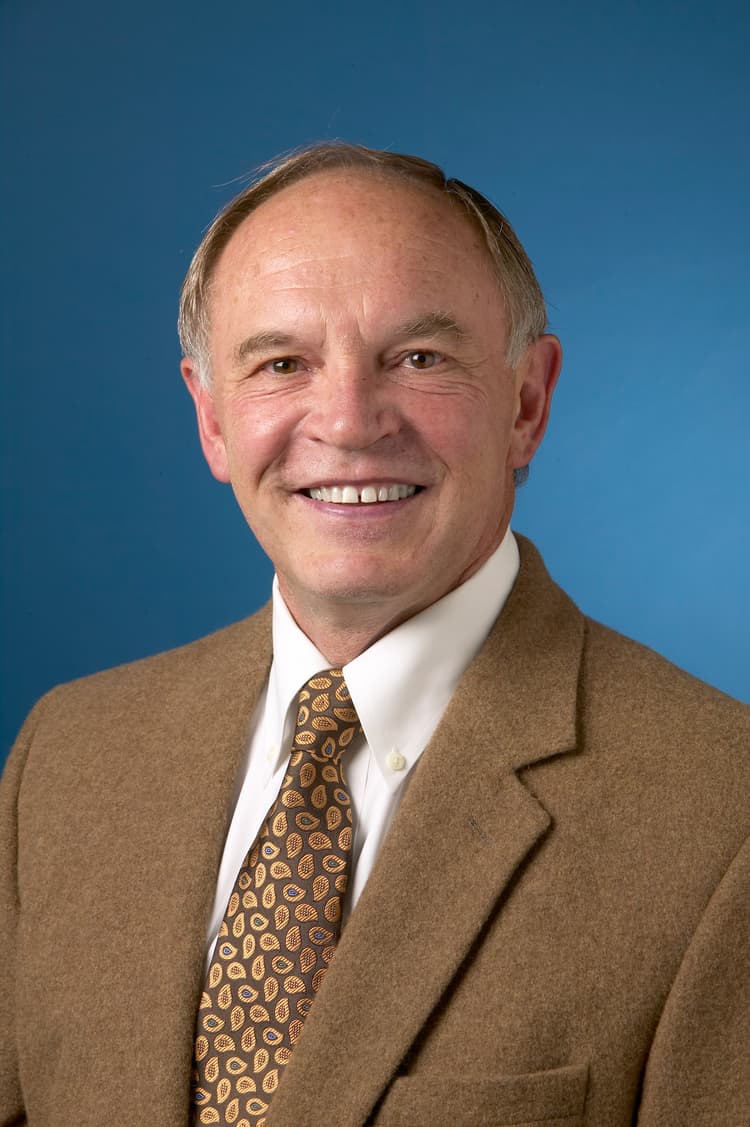
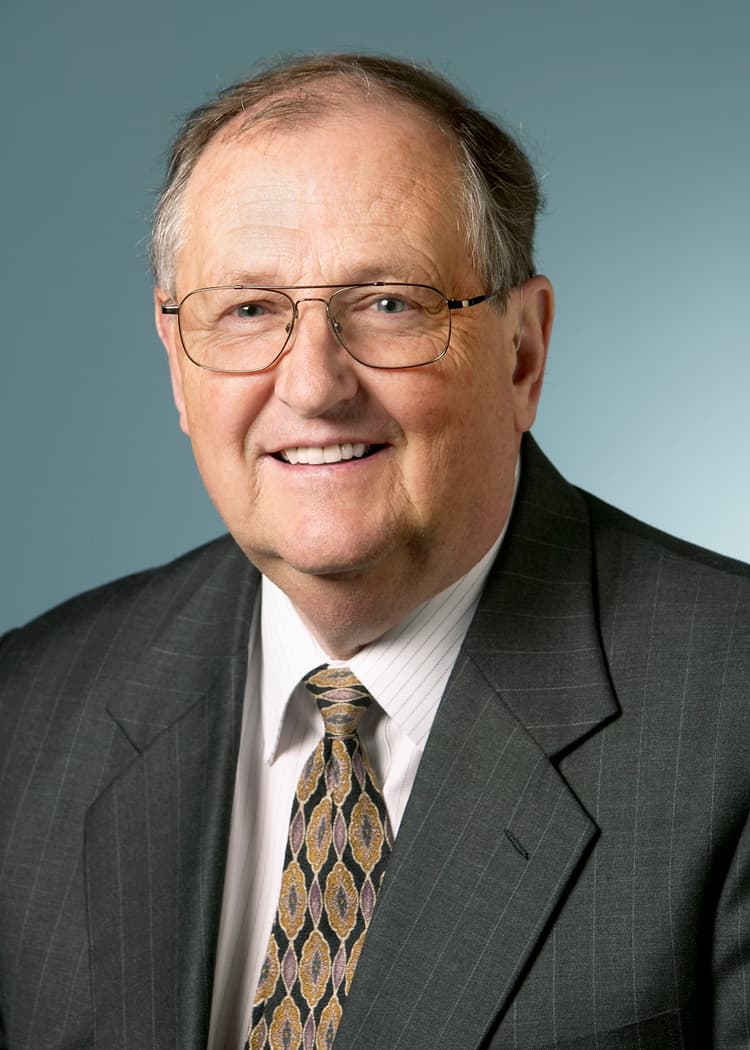
Thomas Sowell is the Rose and Milton Friedman Senior Fellow on Public Policy, Emeritus, at the Hoover Institution.
He writes on economics, history, social policy, ethnicity, and the history of ideas. His most recent book, Discrimination and Disparities (2018), gathers a wide array of empirical evidence to challenge the idea that different economic outcomes can be explained by any one factor, be it discrimination, exploitation or genetics. His books on economics include Housing Boom and Bust (2009), Intellectuals and Society (2009), Applied Economics (2009), Economic Facts and Fallacies (2008), Basic Economics (2007), and Affirmative Action Around the World (2004). Other books on economics he has written include Classical Economics Reconsidered (1974), Say’s Law (1972), and Economics: Analysis and Issues (1971). On social policy, he has written Knowledge and Decisions (1980), Preferential Policies (1989), Inside American Education (1993), The Vision of the Anointed (1995), Barbarians Inside the Gates (1999), and The Quest for Cosmic Justice (1999). On the history of ideas he has written Marxism (1985) and Conflict of Vision (1987). Sowell also wrote Late-Talking Children (1997). He has also written a monograph on law titled Judicial Activism Reconsidered, published by the Hoover Institution Press in 1989. His writings have also appeared in scholarly journals in economics, law, and other fields.
Sowell’s current research focuses on cultural history in a world perspective, a subject on which he began to write a trilogy in 1982. The trilogy includes Race and Culture (1994), Migrations and Cultures (1996), and Conquests and Cultures (1998).
Sowell's journalistic writings include a nationally syndicated column that appears in more than 150 newspapers from Boston to Honolulu. Some of these essays have been collected in book form, most recently in Ever Wonder Why? and Other Controversial Essays published by the Hoover Institution Press in 2006.
Over the past three decades, Sowell has taught economics at various colleges and universities, including Cornell, Amherst, and the University of California at Los Angeles, as well as the history of ideas at Brandeis University. He has also been associated with three other research centers, in addition to the Hoover Institution. He was project director at the Urban Institute, 1972-1974, a fellow at the Center for Advanced Study in the Behavioral Sciences at Stanford University, 1976–77, and was an adjunct scholar of the American Enterprise Institute, 1975-76.
Sowell was awarded the National Humanities Medal in 2002. In 2003, Sowell received the Bradley Prize for intellectual achievement. Sowell received his bachelor’s degree in economics (magna cum laude) from Harvard in 1958, his master’s degree in economics from Columbia University in 1959, and his PhD in economics from the University of Chicago in 1968.
Click here to see the Hoover project showcasing the works of Milton and Rose Friedman.
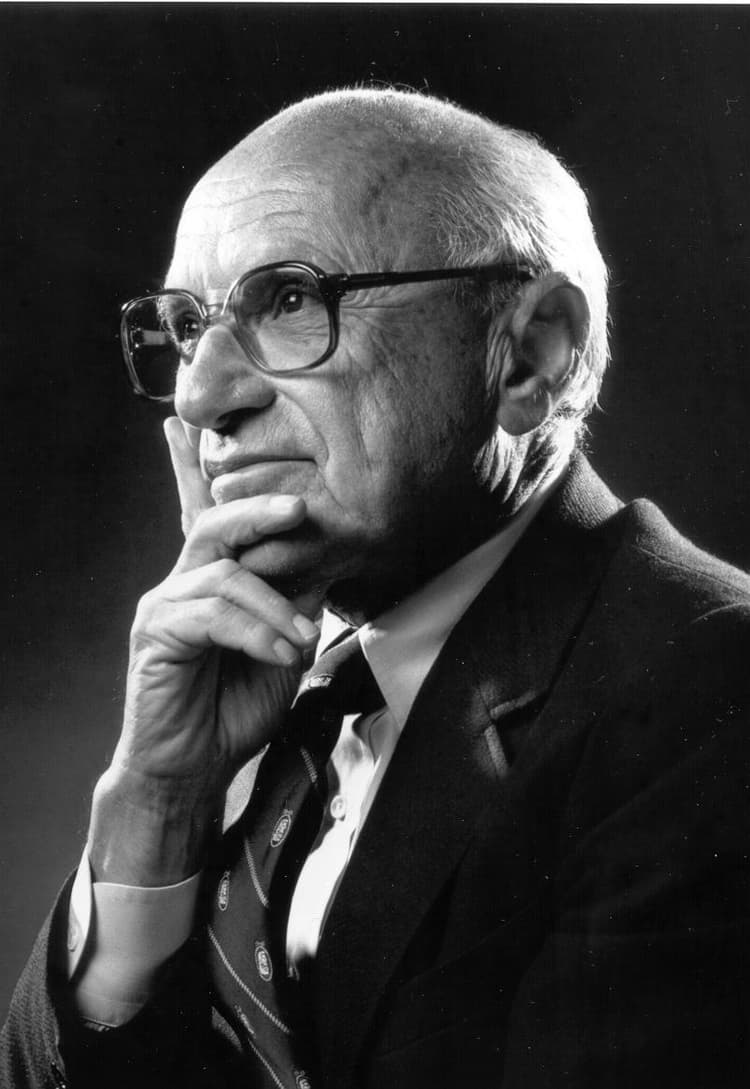
Milton Friedman, recipient of the 1976 Nobel Memorial Prize for economic science, was a senior research fellow at the Hoover Institution from 1977 to 2006. He passed away on Nov. 16, 2006. (Link to obituary.) He was also the Paul Snowden Russell Distinguished Service Professor Emeritus of Economics at the University of Chicago, where he taught from 1946 to 1976, and a member of the research staff of the National Bureau of Economic Research from 1937 to 1981.
Friedman was awarded the Presidential Medal of Freedom in 1988 and received the National Medal of Science the same year.
He was widely regarded as the leader of the Chicago School of monetary economics, which stresses the importance of the quantity of money as an instrument of government policy and as a determinant of business cycles and inflation.
In addition to his scientific work, Friedman also wrote extensively on public policy, always with a primary emphasis on the preservation and extension of individual freedom. His most important books in this field are (with Rose D. Friedman) Capitalism and Freedom (University of Chicago Press, 1962); Bright Promises, Dismal Performance (Thomas Horton and Daughters, 1983), which consists mostly of reprints of columns he wrote for Newsweek from 1966 to 1983; (with Rose D. Friedman) Free to Choose (Harcourt Brace Jovanovich, 1980), which complements a ten-part television series of the same name shown over the Public Broadcasting Service (PBS) network in early 1980; and (with Rose D. Friedman) Tyranny of the Status Quo (Harcourt Brace Jovanovich, 1984), which complements a three-part television series of the same name, shown over PBS in early 1984.
He was a member of the President's Commission on an All-Volunteer Armed Force and the President's Commission on White House Fellows. He was a member of President Ronald Reagan's Economic Policy Advisory Board (a group of experts from outside the government named in 1981 by President Reagan).
Friedman was also active in public affairs, serving as an informal economic adviser to Senator Barry Goldwater in his unsuccessful campaign for the presidency in 1964, to Richard Nixon in his successful 1968 campaign, to President Nixon subsequently, and to Ronald Reagan in his 1980 campaign.
He has published many books and articles, most notably A Theory of the Consumption Function, The Optimum Quantity of Money and Other Essays, and (with A. J. Schwartz) A Monetary History of the United States, Monetary Statistics of the United States, and Monetary Trends in the United States and the United Kingdom.
He was a past president of the American Economic Association, the Western Economic Association, and the Mont Pelerin Society and was a member of the American Philosophical Society and the National Academy of Sciences.
He was awarded honorary degrees by universities in the United States, Japan, Israel, and Guatemala, as well as the Grand Cordon of the First Class Order of the Sacred Treasure by the Japanese government in 1986.
Friedman received a B.A. in 1932 from Rutgers University, an M.A. in 1933 from the University of Chicago, and a Ph.D. in 1946 from Columbia University.
Two Lucky People, his and Rose D. Friedman's memoirs, was published in 1998 by the University of Chicago Press.
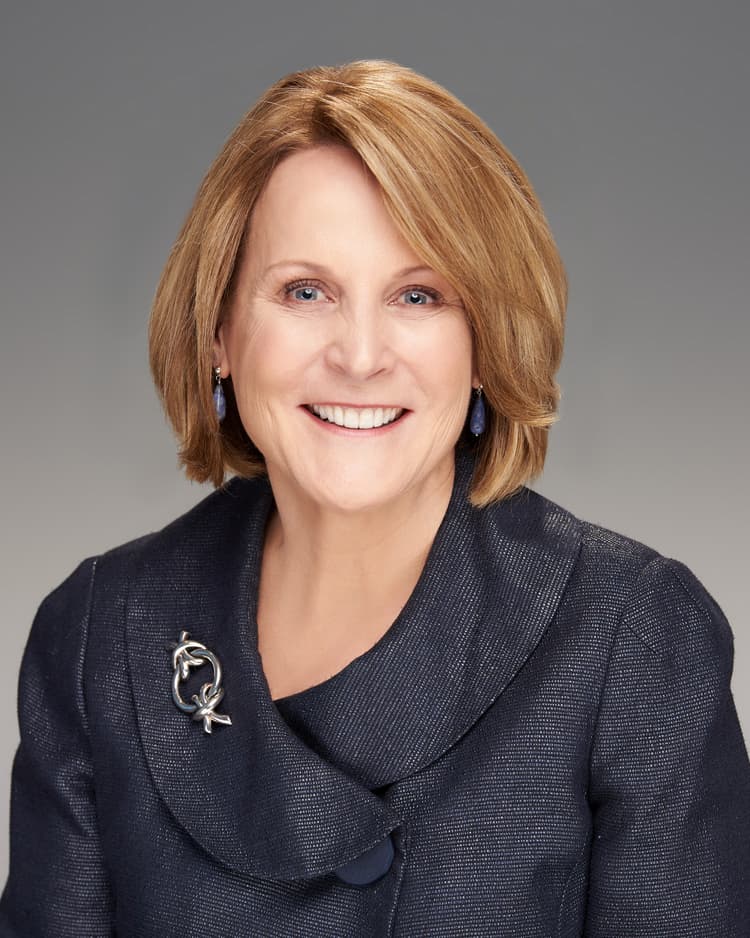
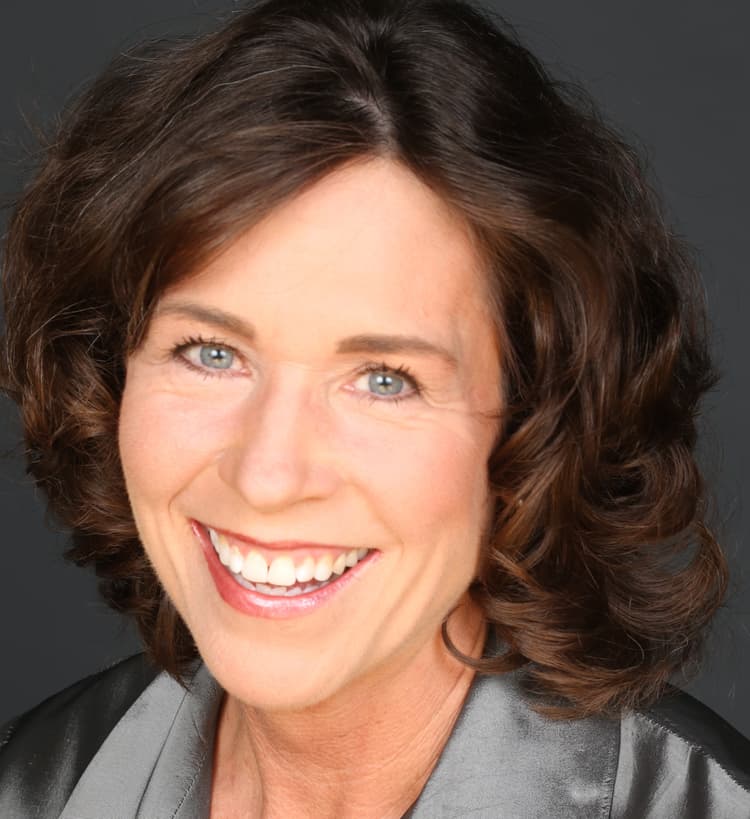
Alice Hill has an uncommon blend of experience—as a federal prosecutor, judge, special assistant to the president, and senior director for the National Security Council. At the White House, she led the development of policy regarding national security and climate change, building climate resilience considerations and capabilities into international development and other federal initiatives, and developing national risk-management standards for the most damaging natural hazards. Hill previously served as a research fellow at Stanford University’s Hoover Institution, where she addressed risks, consequences, and responses associated with catastrophic global events, including the cascading failure of infrastructure and social systems.
Early in her legal career, Hill served as chief of the major frauds division in California’s central district of the US Attorney’s Office, supervising over thirty prosecutors handling white-collar crime involving losses in the billions of dollars. She was honored with the Department of Justice’s highest accolade, the John Marshall Award for Outstanding Legal Achievement. Then as judge and supervising judge within the Los Angeles Superior Court, she was elected by her fellow judges to the committee responsible for overseeing all LA County court operations—600 courtrooms, 2.7 million case filings a year, and an annual budget of $900 million.
In 2009, Hill was asked to serve as Senior Counselor to the Secretary of the US Department of Homeland Security (DHS), helping guide senior leadership of DHS agencies, briefing Congress, and leading and establishing key programs. She led the review of policy regarding creation of the cybersecurity workforce, sexual assault in the military, and legal requirements for terrorism protection; and she founded and led the internationally recognized anti-human trafficking initiative, Blue Campaign. Other accomplishments include overseeing the realignment of DHS international presence in forty-two countries and the development of strategic plans and policies regarding catastrophic biological and chemical incidents ranging from pandemics to weapons of mass destruction.
For three years beginning in 2013, Hill served in several positions for the National Security Council in the White House. With top-secret security clearance, she managed a team of eight National Security Council Directors and developed Federal policies regarding national preparedness for all hazards of global consequence, including climate. She was honored with the Meta-Leader of the Year award from Harvard University’s National Preparedness Leadership Initiative.
Alice Hill joined Stanford University’s Hoover Institution in December 2016 as a research fellow, conducting and publishing research, providing expert testimony, convening public policy leaders, and building the public conversation around catastrophic global threats and our responses. She was honored for her work with the President’s Award from the National Institute of Building Sciences and has been published in Axios, Newsweek, Foreign Policy, The Hill, LawFare, CNN, The Bulletin, and other media. She led development of the Hoover/Stanford Woods Institute/Wilson Center Partnership as well as the Hoover/Aspen Institute Roundtable on Climate and National Security. She serves as a life member on the Council of Foreign Relations, and she expects to publish a new book on climate resilience with Oxford University Press in 2019.
Hill earned her BA in history and economics from Stanford University, followed by a law degree from the University of Virginia School of Law.
Hill is a Member of Boards of Directors and Audit Committees of the domestic subsidiaries of Munich Re Group and is Chair of the Board of the National Cathedral School in Washington, DC. She is a member of the Pacific Council on International Policy, founding board member of the Council on Strategic Risks, and a member of the advisory board of One Concern.
Alice Hill currently resides in Washington DC, also having enjoyed living and working in France, Japan, and Indonesia.
George Pratt Shultz passed away on February 6, 2021.
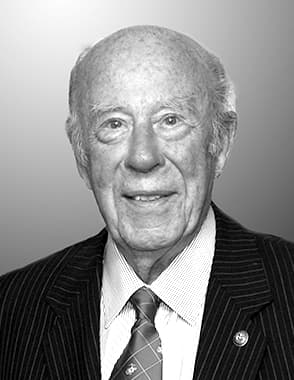
Shultz was the Thomas W. and Susan B. Ford Distinguished Fellow at the Hoover Institution. He had a distinguished career in government, in academia, and in the world of business. Shultz was one of two individuals who have held four different federal cabinet posts; he taught at three of this country’s great universities; and for eight years he was president of a major engineering and construction company.
Shultz was born in New York City on December 13, 1920, and grew up in Englewood, New Jersey. He attended Princeton University, graduating in 1942 with a BA in economics. Shortly after graduation, he enlisted in the US Marine Corps and served through 1945. He then resumed his studies, this time at the Massachusetts Institute of Technology (MIT), where he earned a PhD in industrial economics in 1949. From 1948 to 1957 he taught at MIT, taking a leave of absence in 1955 to serve as a senior staff economist on President Eisenhower’s Council of Economic Advisers.
In 1957, Shultz joined the faculty of the University of Chicago’s Graduate School of Business as a professor of industrial relations. He was named dean five years later. From 1968 to 1969 he was a fellow at the Center for Advanced Study in the Behavioral Sciences at Stanford University. He returned to government when he was appointed secretary of labor by President Nixon in 1969. In June 1970, he became the first director of the newly formed Office of Management and Budget. In May 1972, he was named secretary of the Treasury, a post he held for two years. During this period, Shultz also served as chairman of the Council on Economic Policy, negotiated a series of trade protocols with the Soviet Union, and represented the United States at the Tokyo meeting on the General Agreement on Tariffs and Trade.
Shultz left government service in 1974 to become president and director of the Bechtel Group, where he remained until 1982. While at Bechtel, he maintained close ties with the academic world by joining the faculty of Stanford University.
Shultz held two key positions in the Reagan administration: chairman of the President’s Economic Policy Advisory Board (1981–82) and secretary of state (1982–89). As secretary of state, he played a key role in implementing a foreign policy that led to the successful conclusion of the Cold War and the development of strong relationships between the United States and the countries of the Asia-Pacific region including China, Japan, and the Association of Southeast Asian Nations.
After leaving office, Shultz rejoined the Bechtel Group as director and senior counselor. He also rejoined Stanford as professor of international economics at the Graduate School of Business and as a distinguished fellow at the Hoover Institution. In 2001, Shultz was named the Thomas W. and Susan B. Ford Distinguished Fellow at the Hoover Institution.
In January 1989, Shultz was awarded the Medal of Freedom, the nation’s highest civilian honor. He is also a recipient of the Seoul Peace Prize (1992), the West Point Sylvanus Thayer Award (1992), the Eisenhower Medal for Leadership and Service (2001), the Reagan Distinguished American Award (2002), and the Association for Diplomatic Studies and Training’s Ralph Bunche Award for Diplomatic Excellence (2002). Other honors awarded in 2002 include the Elliot Richardson Prize for Excellence and Integrity in Public Service, the James H. Doolittle Award, and the John Witherspoon Medal for Distinguished Statesmanship. The George Shultz National Foreign Affairs Training Center in Arlington, Virginia, was dedicated in a ceremony on May 29, 2002. Shultz was named a distinguished fellow of the American Economic Association in 2005 and received the American Spirit Award from the National World War II Museum in 2006. In 2007, he received the George Marshall Award from the United States Agency for International Development and the Truman Medal for Economic Policy. He received the Rumford Prize from the American Academy of Arts and Sciences in 2008 and the Commandant’s Leadership Award from the Marine Corps–Law Enforcement Foundation in 2009. In 2011, he received the Congressional Medal of Honor Society’s Distinguished Citizen Award and the first Economic Club of New York Award for Leadership Excellence. In 2012, he was presented with a Democracy Service Medal by the National Endowment for Democracy and received the Henry A. Kissinger Prize at the American Academy in Berlin. The Ronald Reagan Presidential Foundation dedicated the Global Issues and Reagan-Gorbachev Summits Galleries in his honor in June 2012.
Shultz’s publications include Thinking about the Future (Hoover Institution Press, June 2019); Learning from Experience (Hoover Institution Press, October 2016); Issues on My Mind: Strategies for the Future (Hoover Institution Press, 2013); The Nuclear Enterprise: High-Consequence Accidents: How to Enhance Safety and Minimize Risks in Nuclear Weapons and Reactors (Hoover Institution Press, 2012), coedited with Sidney Drell; Ideas & Action: Featuring 10 Commandments for Negotiations (2010); Ending Government Bailouts as We Know Them (Hoover Institution Press 2010), coedited with Kenneth E. Scott and John Taylor; Putting Our House in Order: A Citizen’s Guide to Social Security and Health Care Reform, with John B. Shoven (2008); Turmoil and Triumph: My Years as Secretary of State (1993); Economic Policy beyond the Headlines, with Kenneth Dam (1977); Workers and Wages in the Urban Labor Market, with Albert Rees (1970); Guidelines, Informal Controls, and the Marketplace, with Robert Aliber (1966); Strategies for the Displaced Worker: Confronting Economic Change, with Arnold Weber (1966); Management Organization and the Computer, with Thomas Whisler (eds.) (1960); Labor Problems: Cases and Readings, with John Coleman (1959); The Dynamics of a Labor Market, with Charles Myers (1951); Pressures on Wage Decisions (1951); "Case Study No. 10," with Robert P. Crisara, in Causes of Industrial Peace under Collective Bargaining (1951); and "Case Study No. 7," with Charles A. Myers, in Causes of Industrial Peace under Collective Bargaining (1950).
Shultz holds honorary degrees from Notre Dame, Columbia, Loyola, University of Pennsylvania, Rochester, Princeton, Carnegie-Mellon, City University of New York, Yeshiva University, Weizmann Institute of Science, Baruch College of New York, Hebrew University of Jerusalem, Tbilisi State University in the Republic of Georgia, Technion, Keio University in Tokyo, Williams College, and Peking University.
Dr. Amy Zegart is the Morris Arnold and Nona Jean Cox Senior Fellow at the Hoover Institution, where she leads the Technology Policy Accelerator and the Oster National Security Affairs Fellows Program. Specializing in US intelligence, emerging technologies, and national security, she is also an associate director and senior fellow at the Stanford Institute for Human-Centered AI and a senior fellow at the Freeman Spogli Institute.
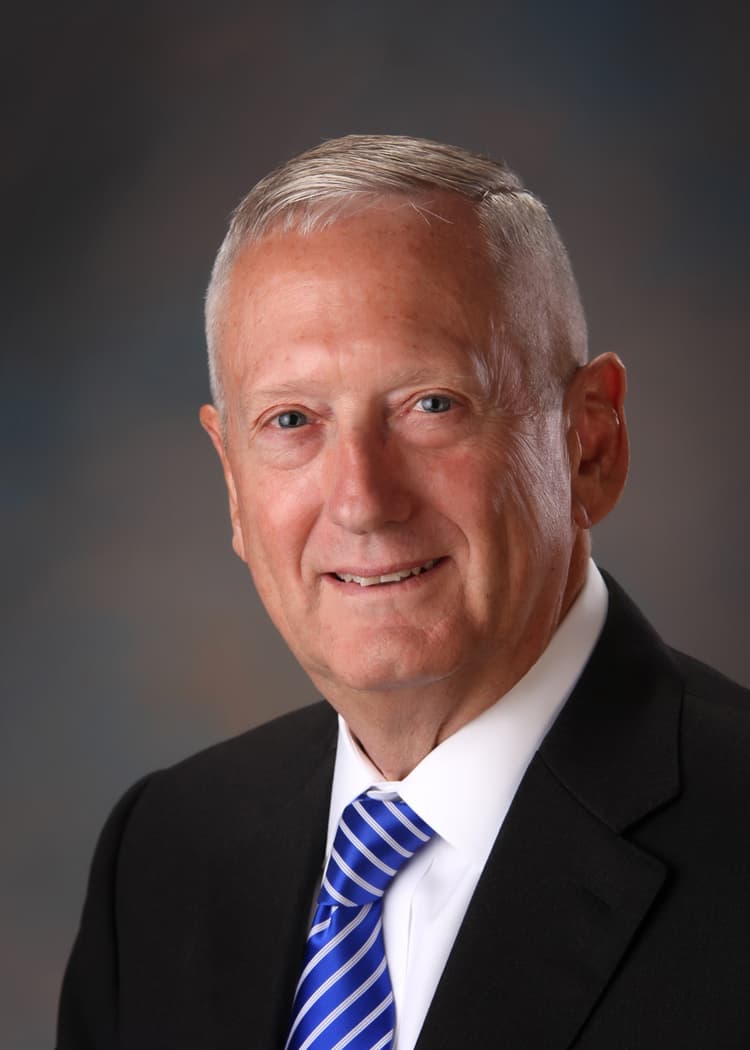
General Jim Mattis, US Marine Corps (Ret.), is the Davies Family Distinguished Fellow, after having served as the nation’s 26th Secretary of Defense in the administration.
In December of 2016, President Donald J. Trump nominated Mattis for Secretary of Defense and he was confirmed a month later. Mattis left Hoover to apply his knowledge and experience to help the President shape his national defense policy.
General Mattis commanded at multiple levels in his forty-three year career as an infantry Marine. As a lieutenant in the western Pacific, he served as a rifle and weapons platoon commander in the Third Marine Division. As a captain in the Pacific and Indian Ocean, he commanded a rifle company and a weapons company in the First Marine Brigade. As a major he was the battalion officer at the Naval Academy Prep School and commanded Marine recruiters in the Pacific Northwest and Hawaii. As a lieutenant colonel he commanded an assault battalion breaching the Iraqi minefields in Operation Desert Storm. As a colonel he commanded 7th Marine Regiment and, on Pentagon duty, he served as the Department of Defense Executive Secretary. As a brigadier general he was the Senior Military Assistant to the Deputy Secretary of Defense.
Following 9-11 he commanded the First Marine Expeditionary Brigade and Naval Task Force 58 in operations against the Taliban in southern Afghanistan. As a major general, he commanded the First Marine Division during the initial attack and subsequent stability operations in Iraq. In his first tour as a lieutenant general, he was in charge of Marine Corps Combat Development at Quantico and subsequently served as Commander, I Marine Expeditionary Force/Commander, U.S. Marine Forces in the Middle East. As a general he served concurrently as the Commander of U.S. Joint Forces Command and as NATO’s Supreme Allied Commander for Transformation.
Before retiring in 2013 he was the Commander of U.S. Central Command, directing military operations of over 250,000 soldiers, sailors, airmen, Coast Guardsmen, Marines and allied forces across the Middle East. He is the author of the New York Times bestseller, Call Sign Chaos: Learning to Lead, and the co-editor of the book, Warriors & Citizens: American Views of Our Military.
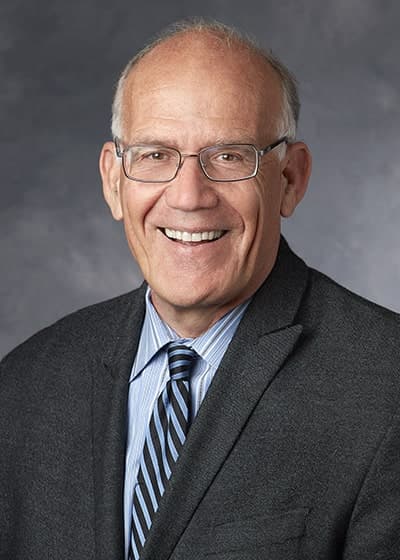
Victor Davis Hanson is the Martin and Illie Anderson Senior Fellow at the Hoover Institution; his focus is classics and military history.
Hanson was a National Endowment for the Humanities fellow at the Center for Advanced Studies in the Behavioral Sciences, Stanford, California (1992–93), a visiting professor of classics at Stanford University (1991–92), the annual Wayne and Marcia Buske Distinguished Visiting Fellow in History at Hillsdale College (2004–), the Visiting Shifron Professor of Military History at the US Naval Academy (2002–3), and the William Simon Visiting Professor of Public Policy at Pepperdine University (2010).
In 1991 he was awarded an American Philological Association Excellence in Teaching Award. He received the Eric Breindel Award for Excellence in Opinion Journalism (2002), presented the Manhattan's Institute's Wriston Lecture (2004), and was awarded the National Humanities Medal (2007) and the Bradley Prize (2008).
Hanson is the author of hundreds of articles, book reviews, and newspaper editorials on Greek, agrarian, and military history and essays on contemporary culture. He has written or edited twenty-four books, the latest of which is The Case for Trump (Basic Books, 2019). His other books include The Second World Wars (Basic Books, 2017); The Savior Generals: How Five Great Commanders Saved Wars That Were Lost - from Ancient Greece to Iraq (Bloomsbury 2013); The End of Sparta (Bloomsbury, 2011); The Father of Us All: War and History, Ancient and Modern (Bloomsbury, 2010); Makers of Ancient Strategy: From the Persian Wars to the Fall of Rome (ed.) (Princeton, 2010); The Other Greeks (California, 1998); The Soul of Battle (Free Press, 1999); Carnage and Culture (Doubleday, 2001); Ripples of Battle (Doubleday, 2003); A War Like No Other (Random House, 2005); The Western Way of War (Alfred Knopf, 1989; 2nd paperback ed., University of California Press, 2000); The Wars of the Ancient Greeks (Cassell, 1999; paperback ed., 2001); and Mexifornia: A State of Becoming (Encounter, 2003), as well as two books on family farming, Fields without Dreams (Free Press, 1995) and The Land Was Everything (Free Press, 1998). Currently, he is a syndicated columnist for Tribune Media Services and a weekly columnist for the National Review Online.
Hanson received a BA in classics at the University of California, Santa Cruz (1975), was a fellow at the American School of Classical Studies, Athens (1977–78), and received his PhD in classics from Stanford University (1980).
David Davenport is a research fellow emeritus at the Hoover Institution specializing in constitutional federalism, civic education, modern American conservatism, and international law. During his career at Hoover, he also served in administrative capacities as counselor to the director and the inaugural director of Hoover’s Washington, DC, program.
Davenport is the former president of Pepperdine University (1985–2000). Under his leadership, the university experienced significant growth in quality and reputation. He is the cofounder of Common Sense California and the Davenport Institute for Public Engagement and Civic Leadership. He also served on the board of California Forward, a major bipartisan reform group, and was a member of Governor Arnold Schwarzenegger’s California Performance Review Commission. He is a former senior fellow of the Ashbrook Center, where he worked on civic education projects.
Davenport and Jeffrey Sikkenga have co-authored a new book on civic education in 2024, A Republic If You Can Teach It: Fixing America's Civic Education Crisis.
With his colleague Gordon Lloyd, Davenport co-authored Equality of Opportunity: A Century of Debate, which was released in 2023. They also co-wrote How Public Policy Became War (2019), Rugged Individualism: Dead or Alive? (2017), The New Deal and Modern American Conservatism: A Defining Rivalry (2013); These books offer distinctive ways of understanding both historic and current debates between progressives and conservatives in the United States.
Davenport has been a regular columnist for the Scripps Howard News Service, the San Francisco Chronicle, Forbes.com, and the Washington Examiner. He has also contributed radio commentaries to the Salem Network.
Dr. Kori Schake is the Deputy Director-General of the International Institute for Strategic Studies (IISS). She was a distinguished research fellow at the Hoover Institution and is the editor, with Jim Mattis, of the book Warriors and Citizens: American Views of Our Military.
She has served in various policy roles including at the White House for the National Security Council; at the Department of Defense for the Office of the Secretary and Joint Chiefs of Staff and the State Department for the Policy Planning Staff. During the 2008 presidential election, she was Senior Policy Advisor on the McCain-Palin campaign.
She has been profiled in publications ranging from national news to popular culture including the Los Angeles Times, Politico, and Vogue Magazine.
Her recent publications include: Safe Passage: The Transition from British to American Hegemony (Harvard University Press, 2017), Republican Foreign Policy After Trump (Survival, Fall 2016), National Security Challenges for the Next President (Orbis, Winter 2017), and Will Washington Abandon the Order?, (Foreign Affairs, Jan/Feb 2017).
Terry L. Anderson has been a senior fellow at the Hoover Institution since 1998 and is currently the John and Jean De Nault Senior Fellow (adjunct). He is the past president of the Property and Environment Research Center in Bozeman, MT, and a Professor Emeritus at Montana State University where he won many teaching awards during his 25 year career.
Anderson is one of the founders of “free market environmentalism,” the idea of using markets and property rights to solve environmental problems, and in 2015 published the third edition of his co-authored book by that title. He is author or editor of 39 books, including most recently, Unlocking the Wealth of Indian Nations (2016), exploring the institutional underpinnings of American Indian reservation economies.
In addition to publishing in professional journals, Terry Anderson speaks around the world and is often featured in the popular press, including frequent editorials in the Wall Street Journal. Dr. Anderson received his Ph.D. from the University of Washington in 1972 and has been a visiting scholar at Oxford University, Basel University, Clemson University, and Cornell, and a Fulbright Fellow at the University of Canterbury.
Terry is an avid outdoorsman who enjoys fly fishing, hiking, skiing, horseback riding, and archery hunting.
Eric Hanushek is the Paul and Jean Hanna Senior Fellow at Stanford University’s Hoover Institution and a leading authority on the economics of education. His pioneering research on teacher quality, school accountability, and the economic returns to educational achievement has shaped policy worldwide. Author of over 300 articles and 26 books, he received the 2021 Yidan Prize for Education Research. He is a Distinguished Graduate of the U.S. Air Force Academy and earned his Ph.D. at MIT.
Tom Church is a policy fellow at the Hoover Institution. He studies health care policy, entitlement reform, income inequality, poverty, and the federal budget.
Church’s research interests include tax-advantaged savings accounts for health care, the fiscal effects of a federal public option, state-based regulatory reform, pro-growth federal tax policy, and the distributional effects of entitlement spending reform.
He has researched the fiscal effects of major health care proposals and is a co-author of Choices for All, a set of common-sense health care reforms. He contributes to Hoover’s Healthcare Policy Working Group, the Fiscal Policy Initiative, and the Tennenbaum Program for Fact-Based Policy.
Church received his master’s degree in public policy with honors from Pepperdine University, specializing in economics and international relations. He has a bachelor’s degree in mathematics and political science from the University of Michigan.
Carson Bruno is the Assistant Dean for Admission and Program Relations at Pepperdine University's School of Public Policy, where he oversees student recruitment, career services, and policy programming. Carson is a former research fellow at the Hoover Institution who primarily studied California public policy, electoral politics, and public opinion. Carson has recently written and spoken extensively on California’s economic recovery, the economic and policy importance of Silicon Valley, California’s housing affordability crisis, the impact of public opinion on Sacramento policymaking, the effects of California’s one-party rule, and California’s drought and water system, energy portfolio, and climate change actions. Moreover, Carson has explored pension, tax, and government reforms, how best to alleviate poverty in California, transportation issues, and California’s electoral scene.
Carson also examined domestic economic policy, tax policy, and the intersection of energy and environmental policy. His central interest is in developing market-efficient and effective policies that complement California public opinion and spur economic growth, advance personal liberty, and improve economic mobility within the state. Carson’s examination of national policy largely focused on its effect on state policy-making decisions.
While a research fellow, Carson was co-editor of Eureka, the Hoover Institution’s bi-monthly web periodical that discusses the policy, political, and economic issues confronting California and was a member of the Golden State Poll development team. Carson has a monthly column on RealClearMarkets and has been featured in the Sacramento Bee, San Jose Mercury News, San Francisco Chronicle, CalMatters, Washington Examiner, OC Register, and Fox News. Carson was also a regular guest on the John Batchelor Show and the Commonwealth Club of California’s Week to Week Political Roundtable.
Before joining the Hoover Institution, Carson structured tax-exempt and taxable municipal bond issuances as a public finance investment banker, which gave him an in-depth look at state and local fiscal policy decisions. He received his master’s degree in public policy with honors from Pepperdine University, specializing in economics and American politics. He has a BS in accounting and business management, with special attainments in commerce, from Washington and Lee University.
Michael W. McConnell is the Richard and Frances Mallery Professor of Law and the director of the Constitutional Law Center at Stanford Law School, and a senior fellow at the Hoover Institution. From 2002 to 2009, he served as a circuit judge on the US Court of Appeals for the Tenth Circuit. He was nominated by President George W. Bush, a Republican, and confirmed by a Democratic-majority Senate by unanimous consent. McConnell has previously held chaired professorships at the University of Chicago and the University of Utah, and visiting professorships at Harvard and New York University. He teaches courses on constitutional law, constitutional history, the First Amendment, and interpretive theory. He has published widely in the fields of constitutional law and theory, especially on matters relating to church and state, equal protection, and the separation of powers.
His latest book, The President Who Would Not Be King: Executive Power under the Constitution, was published by Princeton University Press in November 2020. McConnell has argued fifteen cases in the US Supreme Court, most recently a 8-1 victory in a Takings Clause case on behalf of California raisin farmers. He served as law clerk to Supreme Court Justice William J. Brennan Jr. and DC Circuit Chief Judge J. Skelly Wright. He has been assistant general counsel of the Office of Management and Budget, assistant to the solicitor general of the Department of Justice, and a member of the President’s Intelligence Oversight Board. He is senior of counsel to the law firm Wilson, Sonsini, Goodrich & Rosati.
Admiral James O. Ellis Jr. is Annenberg Distinguished Visiting Fellow at the Hoover Institution, where he oversees both the Global Policy and Strategy Initiative and the George P. Shultz Energy Policy Working Group. He retired from a 39-year career with the US Navy in 2004. He has also served in the private and nonprofit sectors in areas of energy and nuclear security.
A 1969 graduate of the US Naval Academy, Ellis was designated a naval aviator in 1971. His service as a navy fighter pilot included tours with two carrier-based fighter squadrons and assignment as commanding officer of an F/A-18 strike fighter squadron. In 1991, he assumed command of the USS Abraham Lincoln, a nuclear-powered aircraft carrier. After selection to rear admiral, in 1996, he served as a carrier battle group commander, leading contingency response operations in the Taiwan Strait.
His shore assignments included numerous senior military staff tours. Senior command positions included commander in chief, US Naval Forces, Europe, and commander in chief, Allied Forces, Southern Europe, during a time of historic NATO expansion. He led US and NATO forces in combat and humanitarian operations during the 1999 Kosovo crisis.
Ellis’s final assignment in the navy was as commander of the US Strategic Command during a time of challenge and change. In this role, he was responsible for the global command and control of US strategic and space forces, reporting directly to the secretary of defense.
After his naval career, he joined the Institute of Nuclear Power Operations (INPO) as president and chief executive officer. INPO, sponsored by the commercial nuclear industry, is an independent, nonprofit organization whose mission is to promote the highest levels of safety and reliability in the operation of commercial nuclear electric generating plants. He retired from INPO in 2012.
Ellis is also the former board chair of Level 3 Communications and served on the board of Lockheed Martin Corporation and Dominion Energy. In 2006, he became a member of the Military Advisory Panel to the Iraq Study Group. In 2009, he completed three years of service on the President’s Intelligence Advisory Board. A former board chair of the nonprofit Space Foundation, in 2018 he was appointed chairman of the Users’ Advisory Group to the Vice President’s National Space Council, where he served until 2022.
Ellis holds a master’s degree in aerospace engineering from the Georgia Institute of Technology. He was inducted into the school’s Engineering Hall of Fame in 2005. He completed US Navy Nuclear Power Training and was qualified in the operation and maintenance of naval nuclear propulsion plants. He is a graduate of the Navy Test Pilot School and the Navy Fighter Weapons School (Top Gun). In 2013, Ellis was elected to the National Academy of Engineering for “contributions to global nuclear safety.”
George P. Shultz Senior Fellow in Economics (joint)
Joshua Rauh is the Ormond Family Professor of Finance at Stanford’s Graduate School of Business and the George P. Shultz Senior Fellow in Economics (joint) at the Hoover Institution. He leads the Hoover Institution's Fiscal Policy Initiative and the Hoover Institution State and Local Governance Initiative. He formerly served at the White House where he was principal chief economist on the President’s Council of Economic Advisers (2019-20), and taught at the University of Chicago’s Booth School of Business (2004–9) and the Kellogg School of Management (2009–12). At the Hoover Institution he has served as Director of Research (2018-19). He has testified before House, Joint, and Joint Select Committees of the United States Congress, and he is a member of the Panel of Economic Advisers of the Congressional Budget Office.
His research focuses on government liabilities, corporate and individual taxation, and institutional investing. His work has received media coverage in outlets such as the Wall Street Journal, the New York Times, the Financial Times, and The Economist. He has received various awards recognizing his scholarship including the Brattle Prize and the Smith Breeden Prize of the American Finance Association. His scholarly papers have appeared in journals such as the Journal of Political Economy, the Quarterly Journal of Economics, the Journal of Finance, the Journal of Financial Economics, the Review of Financial Studies, and the Journal of Public Economics. He is a Research Associate of the National Bureau of Economic Research.
He has published numerous op-eds in outlets including the Wall Street Journal, The Hill, and The National Review online. His PragerU videos on public pensions, the role of government, and taxation and inequality have together been viewed over 10 million times. He is the founder of the Liberty Lens Economics Substack.
Prior to his academic career, Dr. Rauh was an associate economist at Goldman Sachs in London. He received a BA from Yale University and a PhD from the Massachusetts Institute of Technology, both in economics.
James E. Goodby has served in the US Foreign Service, achieving the rank of Career Minister, and was appointed to five ambassadorial-rank positions by Presidents Carter, Reagan, and Clinton, including ambassador to Finland. He taught at Georgetown, Syracuse, and Carnegie Mellon Universities and is Distinguished Service Professor Emeritus at Carnegie Mellon. Ambassador Goodby has worked with former Secretary of State George Shultz at Hoover since 2007. He is a visiting fellow at the Hoover Institution.
He was a Distinguished Service Professor at Carnegie Mellon University from 1989 to 1999 and is now a professor emeritus. Selected for the US Foreign Service through competitive examinations in 1952, Goodby rose to the rank of career minister in the Senior Foreign Service and was given five presidential appointments to ambassadorial rank, including ambassador to Finland (1980–81). During his Foreign Service career he was involved as a negotiator or as a policy adviser in the creation of the International Atomic Energy Agency, the negotiation of the limited nuclear test ban treaty, START, the Conference on Disarmament in Europe, and cooperative threat reduction (the Nunn-Lugar program).
Goodby is the author and editor of several books. His most recent publication is Deterrence: Its Past and Future—Papers Presented at Hoover Institution, November 2010 (Hoover Institution Press, 2011) edited with George P. Shultz and Sidney D. Drell. He also wrote At the Borderline of Armageddon: How American Presidents Managed the Atom Bomb (Rowman & Littlefield, 2006). With Sidney Drell he wrote The Gravest Danger: Nuclear Weapons (Hoover Institution Press, 2003) and the essay A World without Nuclear Weapons: End-State Issues (Hoover Institution Press, 2009). Goodby coedited Reykjavik Revisited: Steps toward a World Free of Nuclear Weapons (Hoover Institution Press, 2008) and contributed essays to Reykjavik Revisited and Implications of the Reykjavik Summit on Its Twentieth Anniversary (Hoover Institution Press, 2007).
Goodby’s awards include the Presidential Distinguished Service Award, the State Department’s Superior and Distinguished Honor Awards, and the Commander’s Cross of the Order of Merit of Germany. He was named a Distinguished Fellow of the US Institute of Peace in 1992. He was the recipient of the inaugural Heinz Award in Public Policy in 1995. In 1996, he was awarded an honorary doctor of laws degree by the Stetson University College of Law.
Lanhee J. Chen
David and Diane Steffy Fellow in American Public Policy Studies
Lanhee J. Chen, PhD, is the David and Diane Steffy Fellow in American Public Policy Studies at the Hoover Institution and cochair of its Healthcare Policy Working Group, At Stanford University, he is also director of Domestic Policy Studies, lecturer in the Public Policy Program, and an affiliated faculty member of the Center on Democracy, Development and the Rule of Law at the Freeman-Spogli Institute for International Studies.
In addition to his academic appointments, Chen is a partner at the Brunswick Group, a global business advisory firm. He is also a presidentially nominated and Senate-confirmed member of the Amtrak Board of Directors and a member and former chair of the Board of Directors at El Camino Health, an integrated health system in Northern California.
Chen’s writings have appeared in a variety of outlets, including The Wall Street Journal, The New York Times, and The Washington Post, and he is a contributing writer to the Opinion page at the Los Angeles Times. He is also an NBC News contributor and appears frequently on the network’s flagship public affairs program, Meet the Press.
A veteran of several high-profile political campaigns, Chen has worked in politics and government as well as business and academia. As a candidate for California State Controller in 2022, he was the strongest-performing statewide Republican and won endorsements from every major newspaper in the state. He also advised numerous major campaigns, including four presidential efforts.
In 2012, he was policy director of the Romney-Ryan campaign, serving as Governor Mitt Romney’s chief policy adviser, a senior strategist on the campaign, and the person responsible for developing the campaign’s domestic and foreign policy. During the 2014 and 2018 campaign cycles, Chen served as a senior adviser on policy to the National Republican Senatorial Committee.
From 2014 to 2018, Chen served as a presidentially appointed and Senate-confirmed member of the Social Security Advisory Board, an independent, bipartisan panel that advises the president, Congress, and the commissioner of Social Security on matters related to the Social Security and Supplemental Security Income programs. He also served in the George W. Bush administration as a senior official at the US Department of Health and Human Services.
Chen was honored in 2015 as one of the Politico 50, a list of the “thinkers, doers, and visionaries transforming American politics.” He earned a similar honor in 2012 when he was named one of Politico’s “50 Politicos to Watch.”
In 2017, Chen was the William E. Simon Visiting Professor in the School of Public Policy at Pepperdine University. At Stanford, he was previously a lecturer in law at Stanford Law School. An eight-time winner of Harvard University’s Certificate of Distinction in Teaching, Chen has produced scholarship that has appeared or been cited in several of the nation’s top political science journals.
Chen formerly practiced law at Gibson, Dunn & Crutcher LLP and was the Winnie Neubauer Visiting Fellow in Health Policy Studies at the Heritage Foundation. He was also an operating partner and strategic advisor at NewRoad Capital Partners, a private equity fund.
Chen serves in a variety of leadership and advisory roles in nonprofit organizations. He is a director of the Foundation for Research on Equal Opportunity; cochair of the Policy Advisory Board for Free the Facts, a policy education organization; a member of the Board of Directors of the Winston Health Policy Fellowship; a member of the external advisory committee for the AAMC (Association of American Medical Colleges) Research and Action Institute; and a member of the Council of Scholars for the Better Medicare Alliance. He is also a member of the Committee of 100, an organization of prominent Chinese Americans.
Chen earned his PhD and AM in political science from Harvard University, his JD cum laude from Harvard Law School, and his AB magna cum laude in government from Harvard College. He is a member of the State Bar of California.
Russ Roberts is a visiting fellow at the Hoover Institution. In 2006, he founded the award-winning weekly podcast EconTalk, which has featured guests including Milton Friedman, Martha Nussbaum, Christopher Hitchens, Agnes Callard, Bill James, Nassim Nicholas Taleb, Amor Towles, and Emily Oster. All 875+ episodes remain available free of charge at EconTalk.org and reach an audience of more than 125,000 listeners in 200 countries.
His two rap videos on the ideas of John Maynard Keynes and Friedrich Hayek, created with filmmaker John Papola, have had more than 13 million YouTube views, have been subtitled in 11 languages, and are used in high school and college classrooms around the world. His poem and animated video “It’s a Wonderful Loaf” (https://wonderfulloaf.org) is an ode to emergent order. His series on the challenge of using data to establish truth, The Numbers Game, can be found at PolicyEd.org.
His latest book is Wild Problems: A Guide to the Decisions That Define Us (Portfolio, 2022), a look at big life decisions that we make with little help from quantitative data. Other books include Gambling with Other People's Money: How Perverse Incentives Caused the Financial Crisis (Hoover Institution Press, 2019) and How Adam Smith Can Change Your Life: An Unexpected Guide to Human Nature and Happiness (Portfolio, 2014). The latter takes lessons from Adam Smith’s little-known masterpiece The Theory of Moral Sentiments and applies them to modern life.
In 2021, Roberts became the president of Shalem College in Jerusalem, Israel, a liberal arts college dedicated to great ideas and books with the goal of creating the next generation of Israeli leadership.
Michael S. Bernstam, a research fellow at the Hoover Institution, Stanford University, is an economic demographer who studies the centrality of income redistribution for the taxonomy and evolution of economic systems, long-run economic growth, demographic transition, social revolutions, conflict, and other social changes.
The focus of his work in the past ten years has been on the causes of economic growth and contraction in former central plan economies, with special emphasis on Russia, China, and the former East Germany, and how to reconcile them with earlier global experience. To this end, he is at work on the book From Predation to Prosperity: How to Move from Socialism to Markets (with Alvin Rabushka). Several chapters of this book, as well as numerous articles and commentaries on the subject, are posted at www.russiaeconomy.org, a web site created jointly by Bernstam and Rabushka.
Bernstam's previous books include Fixing Russia's Banks: A Proposal for Growth, with Alvin Rabushka (Hoover Institution Press, 1998); Inter-Enterprise Debt and the Russian Coal Sector, with Thomas E. MaCurdy (Partners in Economic Reform for the USAID, 1996); and Reform without Shock, with Vladimir Leksin (Supreme Economic Council of Russia, 1992).
Bernstam's other major publications include Resources, Environment, and Population: Present Knowledge, Future Options, with Kingsley Davis (Oxford University Press, 1991); The Wealth of Nations and the Environment (Institute of Economic Affairs, 1991); Malthus and the Evolution of the Welfare State, with Peter L. Swan (University of New South Wales, 1989); and Below-Replacement Fertility in Industrial Societies: Causes and Consequences, with Kingsley Davis and Rita Ricardo-Campbell (Cambridge University Press, 1986). He has also authored numerous articles, papers, and book chapters.
Bernstam served as visiting professor of economics at Monash University, Victoria, Australia, in 1989 and as an adjunct professor in Stanford University's Overseas Studies Program in 1997–99.
During 1991–95, Bernstam served as economic adviser to the Russian Parliament, the Central Bank of Russia, and the Russian government on several policy projects. He is a regular commentator on the Russian economy and finance for Radio Liberty, Voice of America, and the BBC.
His research papers are available at the Hoover Institution Archives.
Rose and Milton Friedman Senior Fellow on Public Policy (joint)
Michael J. Boskin is the Rose and Milton Friedman Senior Fellow on Public Policy (joint) at the Hoover Institution and the Tully M. Friedman Professor of Economics at Stanford. He is also a research associate of the National Bureau of Economic Research. In addition, he advises governments and businesses globally.
Boskin served as chairman of the President’s Council of Economic Advisers (CEA) from 1989 to 1993, when he helped resolve the Third World Debt and Saving and Loan financial crises, and place the first effective controls on government spending while protecting the defense budget. His CEA was rated by the Council for Excellence in Government as one of the five most respected agencies in the federal government. He earlier served on presidential candidate Ronald Reagan’s Tax Policy Task Force, helping develop the policies that, during Reagan’s presidency, substantially lowered marginal tax rates, indexed tax brackets for inflation, accelerated depreciation, and created IRAs and 401Ks, the economic rationale for which was predicated on his research on the effects of taxes on saving. He later chaired the highly influential blue-ribbon Advisory Commission to Study the Consumer Price Index, whose report has transformed the way government statistical agencies around the world measure inflation, GDP, and productivity.
Boskin serves on several corporate and philanthropic boards of directors, including those of the Oracle Corporation, the Koret Foundation and Bloom Energy.
In addition to Stanford and the University of California, Boskin has taught at Harvard and Yale. The author of more than one hundred fifty books and articles, he is internationally recognized for his research on world economic growth, tax and budget theory and policy, US saving and consumption patterns, and the implications of changing technology and demography on capital, labor, and product markets. His op-eds appear regularly in the Wall Street Journal and other leading newspapers. He also writes a bimonthly column on global economics and politics syndicated in 145 countries.
Boskin has received numerous professional awards and citations, including Stanford’s Distinguished Teaching Award in 1988; the National Association of Business Economists’ Abramson Award for outstanding research and its Distinguished Fellow Award; the Medal of the President of the Italian Republic in 1991 for his contributions to global economic understanding; and the 1998 Adam Smith Prize for outstanding contributions to economics.
Boskin received his BA with highest honors and the Chancellor’s Award as outstanding undergraduate from the University of California–Berkeley, where he also received his MA and PhD.
His research papers and op-eds are available at the Hoover Institution Archives and on his personal website. His current research focuses on the defense budget, federalism, the political economy of redistribution, and more generally, public economics and macroeconomics.
Larry Diamond is the William L. Clayton Senior Fellow (joint) at the Hoover Institution, the Mosbacher Senior Fellow in Global Democracy at the Freeman Spogli Institute for International Studies (FSI), and a Bass University Fellow in Undergraduate Education at Stanford University. He is also professor by courtesy of political science and sociology at Stanford, where he lectures and teaches courses on democracy (including an online course on EdX).
At Hoover, he co-leads the Project on Taiwan in the Indo-Pacific Region and participates in the Program on the US, China, and the World. At FSI, he is among the core faculty of the Center on Democracy, Development, and the Rule of Law, which he directed for six and a half years. He leads FSI’s Israel Studies Program and is a member of the Program on Arab Reform and Development. He also co-leads the Global Digital Policy Incubator, based at FSI’s Cyber Policy Center. He served for thirty-two years as founding coeditor of the Journal of Democracy.
Diamond’s research focuses on global trends affecting freedom and democracy and on US and international policies to defend and advance democracy. His book Ill Winds: Saving Democracy from Russian Rage, Chinese Ambition, and American Complacency (2019; paperback ed. 2020) analyzes the challenges confronting liberal democracy in the United States and around the world and offers an agenda for strengthening and defending democracy at home and abroad. His other books include In Search of Democracy (2016), The Spirit of Democracy (2008), Developing Democracy: Toward Consolidation (1999), Promoting Democracy in the 1990s (1995), and Class, Ethnicity, and Democracy in Nigeria (1989). He has edited or coedited more than fifty books, including China’s Influence and American Interests (2019, with Orville Schell), Silicon Triangle: The United States, Taiwan, China, and Global Semiconductor Security (2023, with James O. Ellis Jr. and Orville Schell), and The Troubling State of India’s Democracy (2024, with Šumit Ganguly and Dinsha Mistree).
During 2002–3, Diamond served as a consultant to the US Agency for International Development and was a contributing author of its report Foreign Aid in the National Interest. He has advised and lectured at universities and think tanks around the world, as well as at the World Bank, the United Nations, the State Department, and other organizations dealing with governance and development. In 2004, Diamond served as a senior adviser on governance to the Coalition Provisional Authority in Baghdad. His book Squandered Victory: The American Occupation and the Bungled Effort to Bring Democracy to Iraq (2005) was one of the first books to critically analyze America’s postwar engagement in Iraq.
Among Diamond’s other edited books are Democracy in Decline?; Democratization and Authoritarianism in the Arab World; Will China Democratize?; and Liberation Technology: Social Media and the Struggle for Democracy, all edited with Marc F. Plattner; and Politics and Culture in Contemporary Iran, with Abbas Milani. With Juan J. Linz and Seymour Martin Lipset, he edited the series Democracy in Developing Countries, which helped to shape a new generation of comparative study of democratic development.
Chester E. Finn Jr. is the Volker Senior Fellow (adjunct) at the Hoover Institution and President Emeritus of the Thomas B. Fordham Institute. At Hoover, he chairs the Working Group on Civics and American Citizenship within the Center for Revitalizing American Institutions. He previously led Hoover’s Task Force on K-12 Education and now participates in the Hoover Education Success Initiative, as much of his career has focused on reforming primary and secondary schooling in the US. That included serving as a member of the Maryland State Board of Education and Maryland's Commission on Innovation and Excellence in Education, as well as Assistant US Secretary of Education and chair of the National Assessment Governing Board.
Finn led Fordham from 1997-2014, after many earlier roles in education, academe, and government, including professor of education and public policy at Vanderbilt University, US assistant secretary of education, and legislative director for Senator Daniel Patrick Moynihan.
A native of Ohio, he holds an undergraduate degree in US history, a master's degree in social studies teaching, and a doctorate in education policy, all from Harvard University.
Finn has served on numerous boards, currently including the National Council on Teacher Quality and the Core Knowledge Foundation. From 1988 to 1996, he served on the National Assessment Governing Board, including two years as its chair.
Author of over twenty books, Finn is author of Assessing the Nation's Report Card: Challenges and Choices for NAEP, published May 2022; co-author (with Andrew Scanlan) of Learning in the Fast Lane: The Past, Present & Future of Advanced Placement, published September 2019; and co-editor (with Michael J. Petrilli) of How to Educate an American: The Conservative Vision for Tomorrow’s Schools, published February 2020. Other works include Charter Schools at the Crossroads: Predicaments, Paradoxes, Possibilities (co-authored with Bruno V. Manno and Brandon L. Wright), and Failing Our Brightest Kids: The Global Challenge of Educating High-Ability Students(co-authored with Brandon L. Wright).
Earlier books include Exam Schools: Inside America’s Most Selective Public High Schools (with Jessica Hockett); Ohio's Education Reform Challenges: Lessons from the Frontlines (with Terry Ryan and Michael Lafferty); Troublemaker: A Personal History of School Reform Since Sputnik; Reroute the Preschool Juggernaut; Leaving No Child Behind: Options for Kids in Failing Schools (co-edited with Frederick M. Hess); Charter Schools in Action: Renewing Public Education (with Bruno V. Manno and Gregg Vanourek); and The Educated Child: A Parent's Guide from Pre-School Through Eighth Grade (with William J. Bennett and John Cribb).
He and his wife, Renu Virmani, a physician, have two grown children and three granddaughters. They live in Chevy Chase, Maryland.
His research papers are available at the Hoover Institution Archives.
Lee E. Ohanian is a senior fellow (adjunct) at the Hoover Institution and a professor of economics and director of the Ettinger Family Program in Macroeconomic Research at the University of California, Los Angeles (UCLA).
He is associate director of the Center for the Advanced Study in Economic Efficiency at Arizona State University and a research associate at the National Bureau of Economic Research, where he codirects the research initiative Macroeconomics across Time and Space. He is also a fellow in the Society for the Advancement of Economic Theory.
His research focuses on economic crises, economic growth, and the impact of public policy on the economy. Ohanian is coeditor of Government Policies and Delayed Economic Recovery (Hoover Institution Press, 2012). He is an adviser to the Federal Reserve Banks of Minneapolis and St. Louis, has previously advised other Federal Reserve banks, foreign central banks, and the National Science Foundation, and has testified to national and state legislative committees on economic policy. He is on the editorial boards of Econometrica and Macroeconomic Dynamics. He is a frequent media commentator and writes for the Wall Street Journal, Forbes, and Investor’s Business Daily. He has won numerous teaching awards at UCLA and the University of Rochester.
He previously served on the faculties of the Universities of Minnesota and Pennsylvania and as vice president at Security Pacific Bank. He received his undergraduate degree in economics from the University of California, Santa Barbara, and his PhD in economics from the University of Rochester.
Clint Bolick is a research fellow at the Hoover Institution and also serves as an Associate Justice of the Supreme Court of Arizona. Previously he was the director of the Goldwater Institute Center for Constitutional Litigation in Phoenix.
A legal pioneer in a number of areas, Bolick is perhaps best known for his leadership in defending state-based school choice programs. He has argued and won significant cases in both state and federal courts, winning school choice victories in the Supreme Courts of Wisconsin, Ohio, and Arizona, as well as in Zelman v. Simmons-Harris before the Supreme Court of the United States. Bolick has also set landmark precedents defending freedom of enterprise and private property rights and challenging corporate subsidies and racial classifications.
Before joining the Goldwater Institute in 2007, Bolick was cofounder of the Institute for Justice and former president of the Alliance for School Choice.
Bolick is the author of several books, most recently Unshackled: Freeing America’s K–12 Education System, Two-Fer: Electing a President and a Supreme Court (Hoover Institution Press, 2012), Death Grip: Loosening the Law’s Stranglehold over Economic Liberty (Hoover Institution Press, 2011) and David’s Hammer:The Case for an Activist Judiciary (2007). Other publications include Leviathan: The Growth of Local Government and the Erosion of Liberty (Hoover Institution Press, 2004) and Voucher Wars: Waging the Legal Battle over School Choice (2003).
The recipient of many honors, Bolick was named one of three Lawyers of the Year in 2003 by American Lawyer. In 2006, Bolick was the recipient of a Bradley Prize for excellence in “strengthening American democratic capitalism.” In 2009, Legal Times named Bolick one of the “90 greatest Washington lawyers of the past 30 years.”
Bolick received his law degree from the University of California at Davis in 1982 and his undergraduate degree from Drew University in 1979.
David Brady is the Davies Family Senior Fellow, Emeritus at the Hoover Institution and the Bowen H. and Janice Arthur McCoy Professor of Political Science in the Stanford Graduate School of Business.
He has published seven books and more than a hundred papers in journals and books. Among his most recent books are Leadership and Growth (World Bank Publications, 2010) with Michael Spence, Revolving Gridlock: Politics and Policy from Carter to Bush II (Westview Press, 2006), and Red and Blue Nation? Characteristics and Causes of America’s Polarized Politics with Pietro Nivola (Brookings Institution Press, 2007). His recent articles include “Why Is Health Care Reform So Difficult?” with Daniel Kessler, Journal of Health Politics, Policy and Law, April 2010; “Putting the Public’s Money Where Its Mouth Is” with Daniel Kessler, Health Affairs: The Policy Journal of the Health Sphere, August 2009, pages 917–25; “Leadership and Politics: A Perspective from the Growth Commission,” with Michael Spence, Oxford Review of Economic Policy, 25, no. 2 (2009): 205–18; “The 2010 Elections: Why Did Political Science Forecasts Go Awry?” with Morris P. Fiorina and Arjun Wilkins, 2011.
Brady has been on continual appointment at Stanford University since 1986, where he has served as associate dean for Academic Affairs in the Graduate School of Business (GSB) and as vice provost for Distance Learning. He has twice been a fellow at the Center for Advanced Study in the Behavioral Sciences and was elected to the American Academy of Arts and Sciences in 1987. He presently holds the Bowen H. and Janice Arthur McCoy Professorship in Ethics at the Business School and was deputy director of the Hoover Institution from 2004-2014.
During his teaching career, he won the Dinkelspiel Award for service to undergraduates, the Richard Lyman Prize for service to alumni, the Bob Davies Award and the Jaedicke Silver Cup from the GSB, and the first Phi Beta Kappa Teaching Award given at Stanford. He also won the George Brown Teaching Award at Rice University.
James L. Sweeney, known for his work energy economics and energy policy, was a Hoover Institution senior fellow (courtesy).
Sweeney analyzes economic and policy issues, especially those involving energy systems and/or the environment. He has particular research interests in global climate change, automotive fuel economy regulation, electricity market problems, and market structure issues.
He is a professor of management science and engineering at Stanford University, where he was appointed to the faculty in 1971. He also is director of the Precourt Energy Efficiency Center and a senior fellow at the Stanford Institute for Economic Policy Research.
At Stanford, Sweeney was chairman, Department of Engineering-Economic Systems & Operations Research, 1996–98; chairman, Department of Engineering-Economic Systems, 1991–96; director, Center for Economic Policy Research, 1984–86; chairman, Institute for Energy Studies, 1981–85, and director, Energy Modeling Forum, 1978–84.
He recently served on the review panel for the State of California Public Interest Energy Research Program, the National Research Council's Committee on Benefits of DOE R&D in Energy Efficiency and Fossil Energy, and the National Research Council's Committee on Effectiveness and Impact of Corporate Average Fuel Economy (CAFE) Standards.
In 2000, Sweeney was appointed a fellow of the California Council on Science and Technology. He was elected a senior fellow of the U.S. Association for Energy Economics in 1999. He won an Excellence in Teaching Award from the Stanford Society of Black Scientists and Engineers in 1989 and the Federal Energy Administration Distinguished Service Award in 1975.
Sweeney's publications include Energy Efficiency: Building a Clean, Secure Economy (Hoover Institution Press, 2016), California Electricity Crisis (Hoover Institution Press, 2002), "Trade and Industry Impacts of the Kyoto Protocol," with W. D. Montgomery, in The Business Roundtable, October 1999; "Natural Resource Economics," The Social Science Encyclopedia, 2d ed. (London: Routledge, 1996), "Energy Economics," International Encyclopedia of the Social & Behavioral Sciences (Elsevier Science, 2001), and Handbook of Natural Resource and Energy Economics, with A. V. Kneese (North Holland: Volumes I and II, 1993 and Volume III, 1995).
Sweeney earned a bachelor's degree in electrical engineering from the Massachusetts Institute of Technology in 1966 and a doctoral degree in engineering-economic systems from Stanford University in 1971.
The Policy Stories series features Hoover Institution scholars in 4-5 minute "mini-documentaries" discussing the real-life implications of public policy throughout the world. These segments offer insights into why these policies are relevant and important for today's public policy discussion.
This series animates succinct policy explanations from various talks, podcasts, and presentations given by policy experts. These videos explain first principles and real world examples in a way that are easy to understand and share with your friends.
PolicyEd introduces the new educational video series Perspectives on Policy, which brings Hoover scholars' research and analysis to life in engaging narratives. Visual metaphors and illustrations convey insights about public policy. This series enhances traditional academic lectures with modern motion graphics and story-telling.
The American ability to inspire--which we call exceptionalism--is not automatic. It takes continued efforts to be realized in a changing world. In this series, scholars at the Hoover Institution--professors, thinkers, and practitioners of global renown in their respective fields--offer a series of accessible policy ideas for civic, economic, and security architecture that would shore up the long-term foundations of American strengths.