Published February 7, 2023

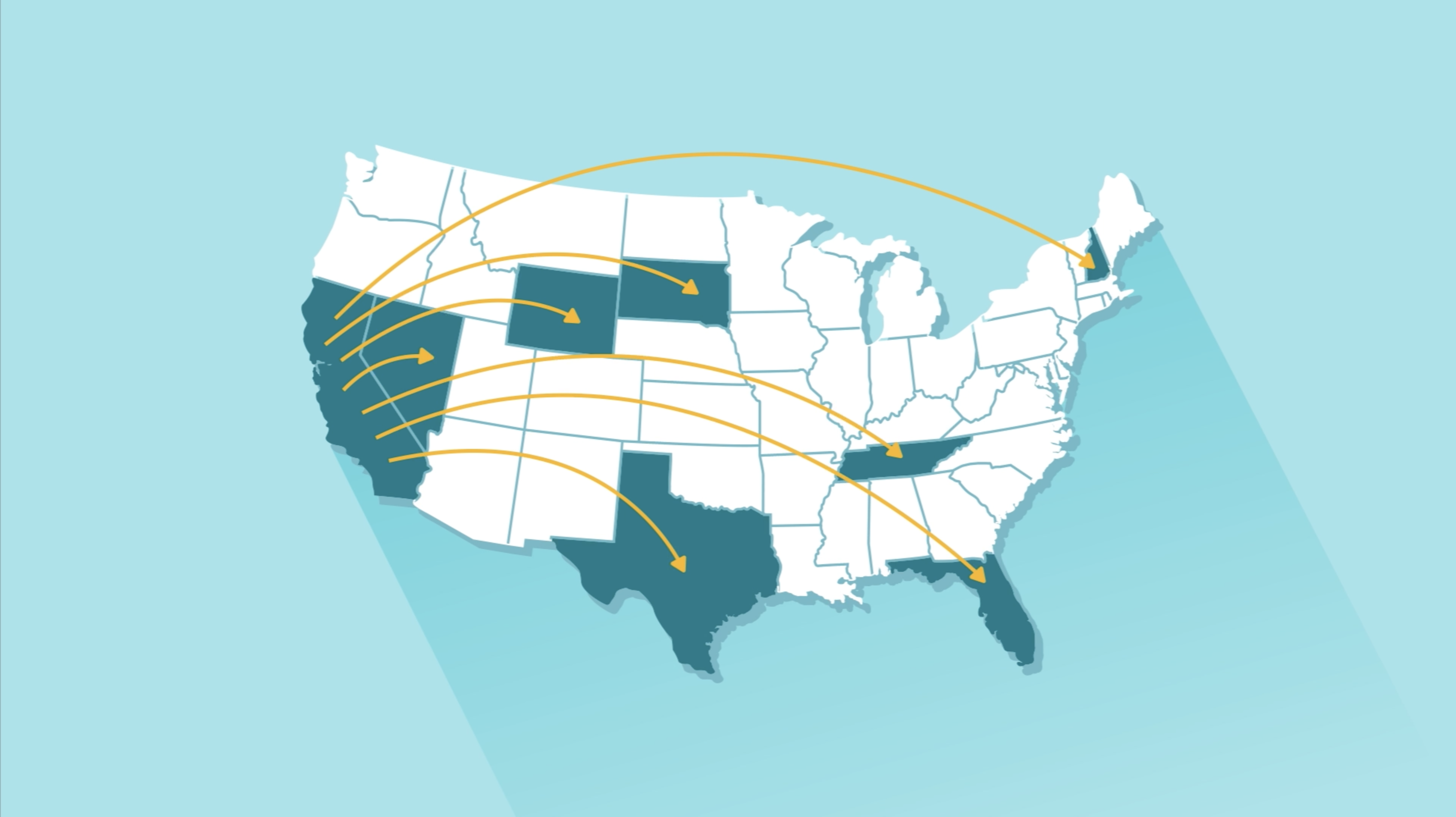
States that require the rich to pay more in taxes than other states run the risk of having high earners leave in search of lower-tax environments. When high earners leave, states lose out on tax revenue and either need to raise taxes on everyone else or cut social spending programs.

Discussion Questions:

  1. Is it ever fair to tax some people more than others? 
  2. Are high-income earners wrong to leave California because of high taxes?

Additional Resources:

  • Read “Killing the Goose That Lays the Golden Egg,” by Joshua D. Rauh and Jillian Ludwig. Available here.
  • Watch “Three Ways to Keep Businesses and People in California,” with Lee Ohanian on PolicyEd. Available here.
  • Read “Myths of Economic Inequality,” by David Henderson. Available here.

Cast

Joshua D. Rauh

Joshua D. Rauh

In 2020, California’s population fell for the first time in over a hundred years.

While any population loss is problematic, the exodus of high-income taxpayers is especially worrisome for the California budget because of how it collects tax revenue. Those earning over $5 million a year represent only 0.1 percent of the population, but in 2020 they paid 25 percent of California’s income taxes. 

An analysis of individual tax data reveals that outmigration by high-income taxpayers spiked in response to two major tax events.

The first was in 2012, when California increased taxes for top earners under Proposition 30. 

The second was in 2017 when the Tax Cuts and Jobs Act limited the amount of state taxes that filers could deduct from their federal taxable income.

The exodus of high earners to states with zero income tax rates means California loses more than just income tax revenue; it also misses out on the future income and spending that come with it.

When states disproportionally rely on high-income taxpayers and capital gains income for most of their tax revenue and then raise their rates too high, those taxpayers respond. 

And the exodus that follows ultimately means that everyone else must then pay higher taxes, or the state must cut social programs to address the revenue shortfall.

More from Intellections

Regulations: The Secret Tax Holding America Back

Regulations: The Secret Tax Holding America Back

The Formula For Economic Growth

The Formula For Economic Growth

Revitalizing American Manufacturing

Revitalizing American Manufacturing

School Absenteeism: Missed Days & Missed Opportunities

School Absenteeism: Missed Days & Missed Opportunities

America’s Nuclear Power Revival

America’s Nuclear Power Revival

Rebuilding America’s Maritime Strength

Rebuilding America’s Maritime Strength

Civics Ceasefire

Civics Ceasefire

Students vs. Salaries

Students vs. Salaries

The Essential State Role in Educating Advanced Learners

The Essential State Role in Educating Advanced Learners

Doing Business with China: Strings Attached

Doing Business with China: Strings Attached

More Like This

The Lapsed Atheist: Charles Murray Makes The Case For God

The Lapsed Atheist: Charles Murray Makes The Case For God

Norway: Defense And Diplomacy In The High North And Beyond

Norway: Defense And Diplomacy In The High North And Beyond

Thomas Sowell Legacy: A Conversation with Justice Clarence Thomas

Thomas Sowell Legacy: A Conversation with Justice Clarence Thomas

Can AI Libel You? The Robby Starbuck Case

Can AI Libel You? The Robby Starbuck Case

Jan Karski

Jan Karski

AI-Powered Business Formation

AI-Powered Business Formation

Complicated Legacy: Jay Bhattacharya On Fauci, RFK, And Vaccines

Complicated Legacy: Jay Bhattacharya On Fauci, RFK, And Vaccines

Iraq: Reform And The Fight For Sovereignty

Iraq: Reform And The Fight For Sovereignty

Securing the Future of Semiconductors

Securing the Future of Semiconductors

Tom Siebel On Education, Reinvention, And The AI Revolution

Tom Siebel On Education, Reinvention, And The AI Revolution

Related

Articles

The Hidden Cause Of The Industrial Revolution

What if the Industrial Revolution began not with steam, but with property rights?

August 17, 2026 • 72 Min Watch

Articles

Hot In The City!

Lydia DePillis of the New York Times has published a pessimistic piece in the New York Times about the economic cost of our hot 2026 summer and future expected hot summers. In this podcast, I optimistically respond to her piece. Here is a very interesting example she reports on.

August 11, 2026

Articles

Ben Sasse On Faith, Family, And Facing Death

What matters when time is short? Ben Sasse joins EconTalk’s Russ Roberts for a candid conversation about mortality, faith, family, work, and the institutions that shape American life. 

August 10, 2026 • 80 Min Watch