







Articles
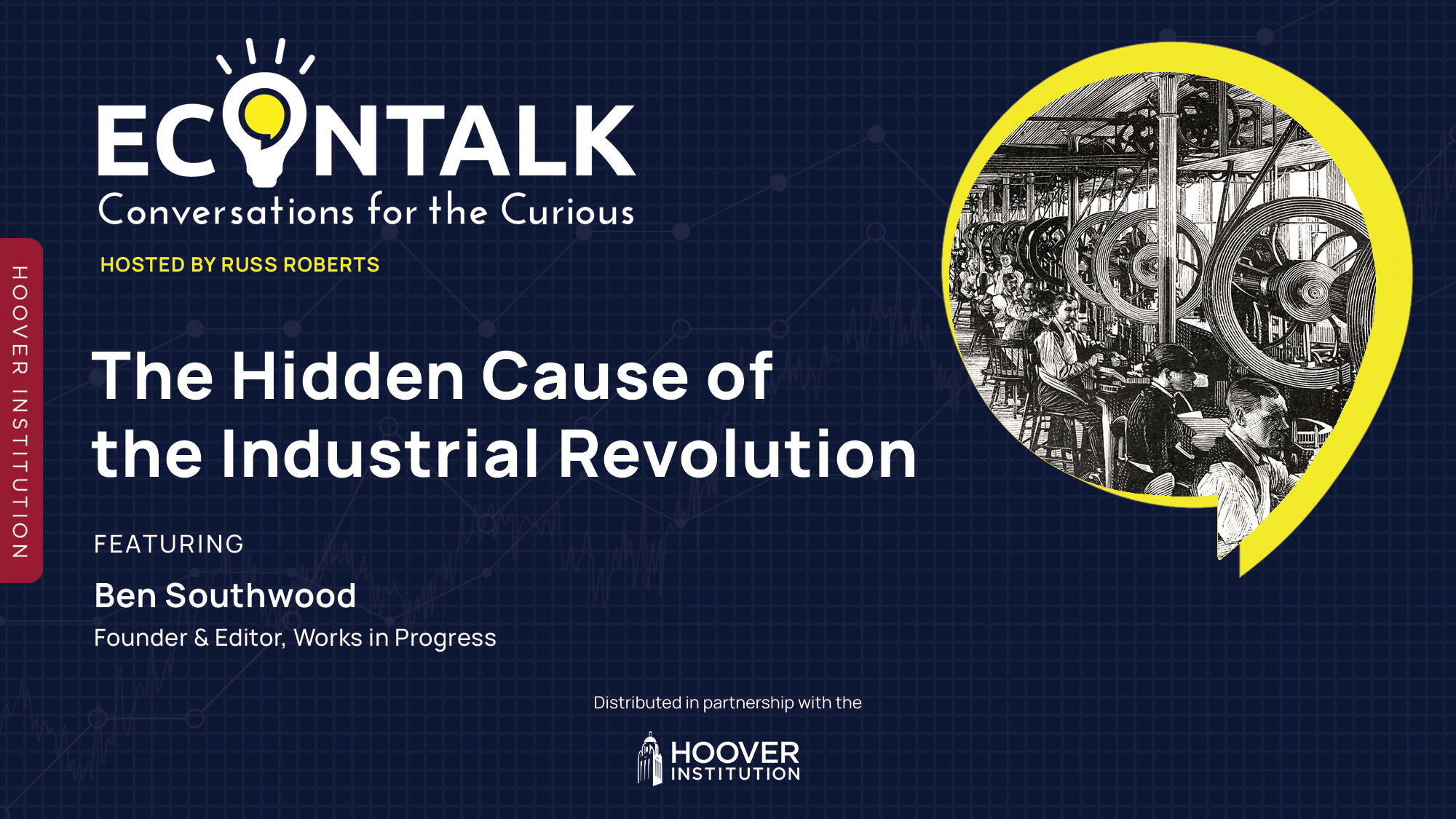
The Hidden Cause Of The Industrial Revolution
What if the Industrial Revolution began not with steam, but with property rights?
August 17, 2026 • 72 Min Watch
Six months into a stage-four pancreatic cancer diagnosis that gave him 90 days to live, Ben Sasse sits down with EconTalk's Russ Roberts for a conversation that refuses easy comfort. The former US senator and University of Florida president is candid about his physical challenges but the heart of this exchange is elsewhere: what actually matters when time is short. Sasse reflects on faith and mortality, the "shattering of idols" like his own workaholism, and his pride in his marriage. Along the way, he offers sharp diagnoses of Congress's abdication of responsibility, the crisis inside American universities, and a republic distracted by the "digital casino" in its pocket. Funny, unflinching, and deeply human, it closes with a meditation on raging against the dying of the light while walking with your head bowed.
Listen to the episode here.
Articles
What if the Industrial Revolution began not with steam, but with property rights?
August 17, 2026 • 72 Min Watch
Articles
Veterans and voters have punished past administrations for costly wars, but these days many Americans don’t seem to care.
August 11, 2026
Articles
Lydia DePillis of the New York Times has published a pessimistic piece in the New York Times about the economic cost of our hot 2026 summer and future expected hot summers. In this podcast, I optimistically respond to her piece. Here is a very interesting example she reports on.
August 11, 2026