
Videos
Innovations In The Payments System
OECD Chief Economist Stefano Scarpetta joins Steve to discuss innovations in the payments system and what it means for transaction costs and financial stability.
October 2, 2026
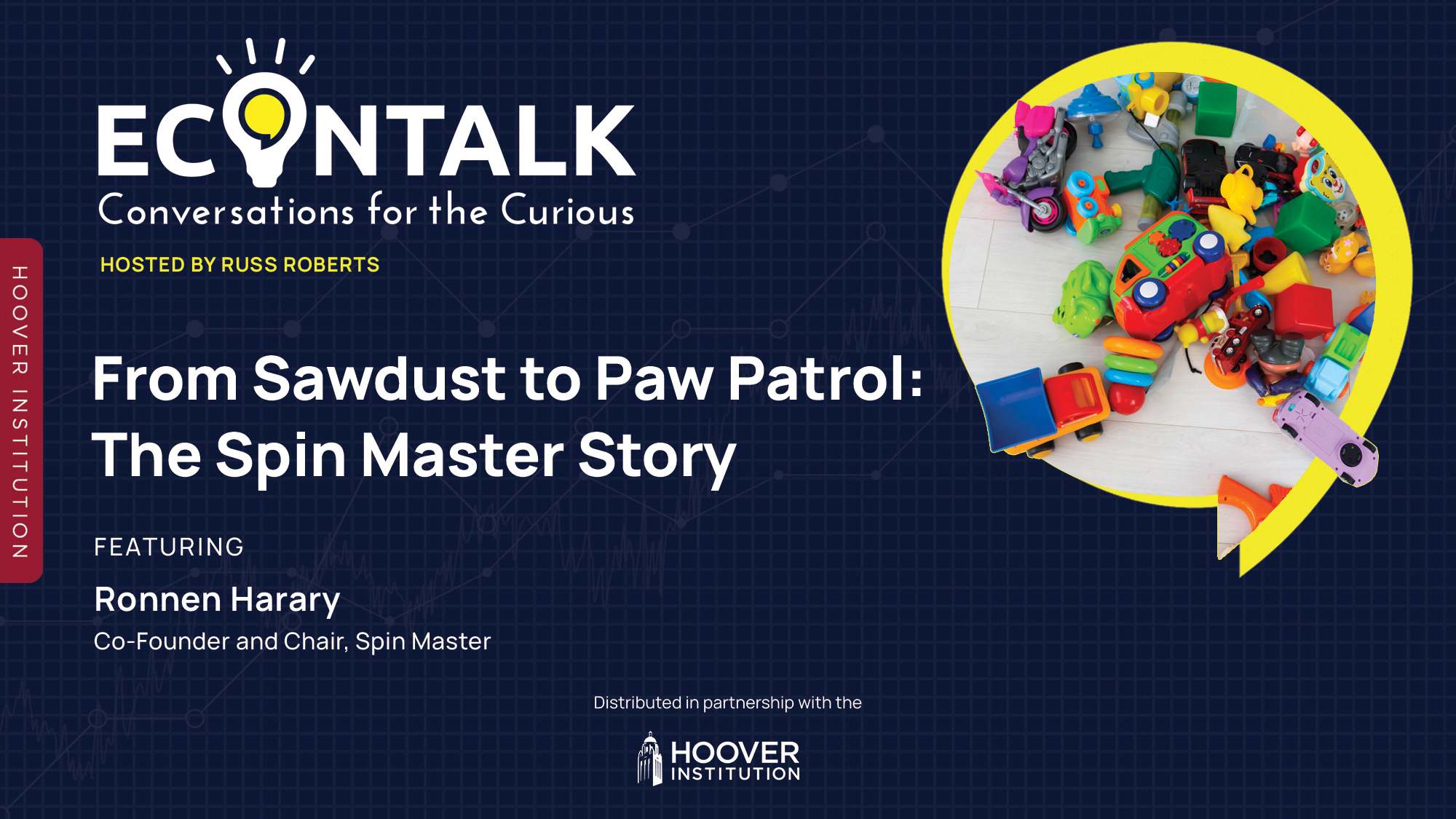
A nylon stocking filled with sawdust that grows grass for hair launched one of the most successful toy companies in the world. Ronnen Harary, co-founder of Spin Master and co-creator of Paw Patrol, talks about his book No Experience Necessary with EconTalk's Russ Roberts. Harary traces his journey from selling grass-growing novelty heads at 23, through Devil Sticks and Air Hogs, to building Bakugan and Paw Patrol into global franchises touching the lives of millions of children. Along the way, he reflects on the artistry of commercial creation and what it means to build something that outlives its founders. The conversation closes on the eternal magic of toys and our childhoods.
Listen to the episode here.
Videos
OECD Chief Economist Stefano Scarpetta joins Steve to discuss innovations in the payments system and what it means for transaction costs and financial stability.
October 2, 2026
Videos
Why are data centers villainized and how will America prepare for a future driven by a great demand for artificial intelligence – and electricity?
October 2, 2026
Videos
Jon Hartley and Tyler Hassen go inside DOGE—what it uncovered, what it changed, and what comes next.
October 1, 2026