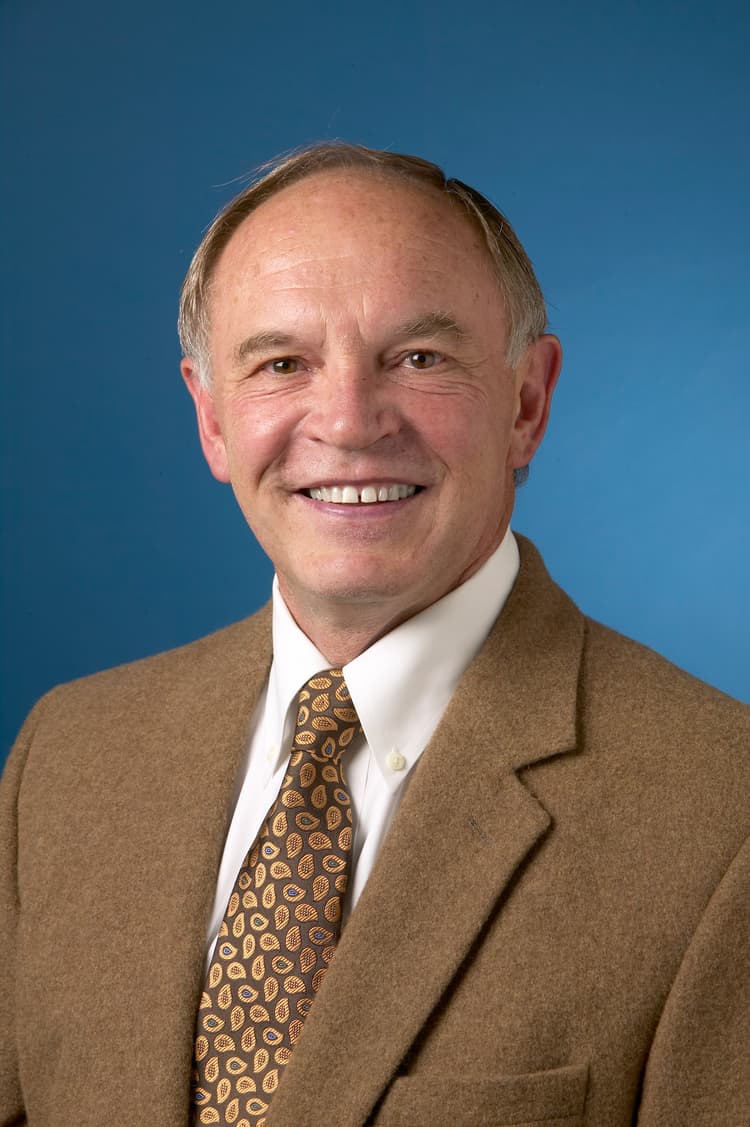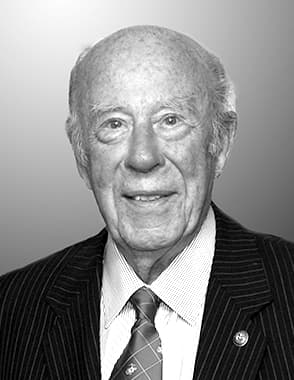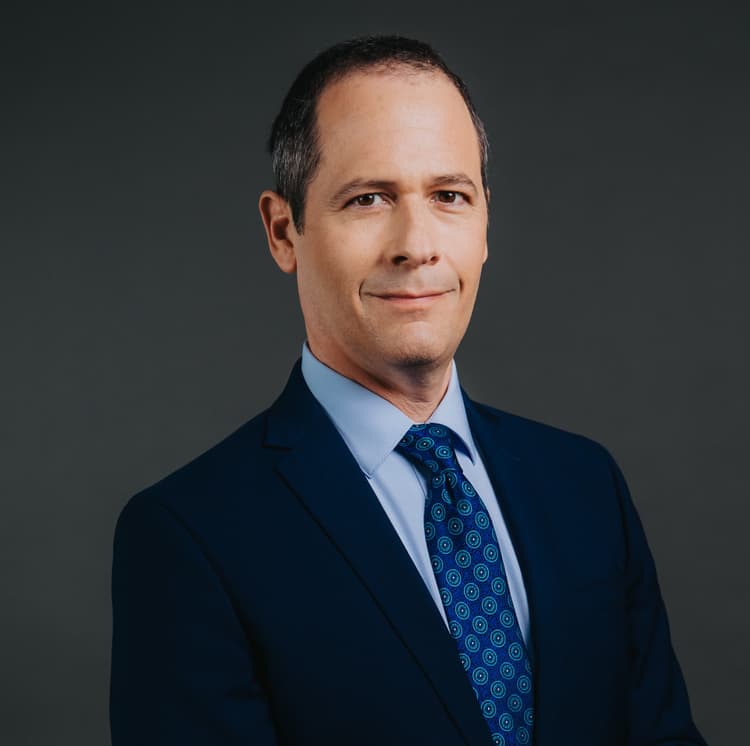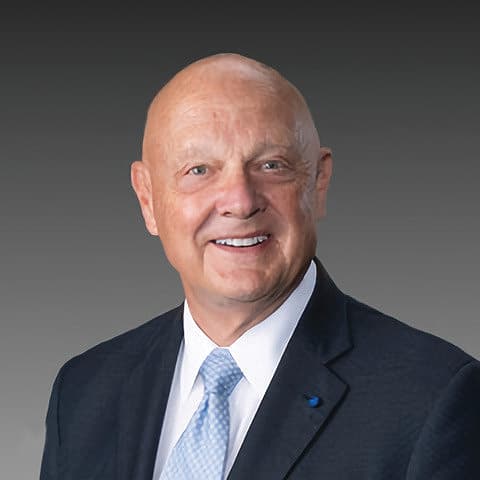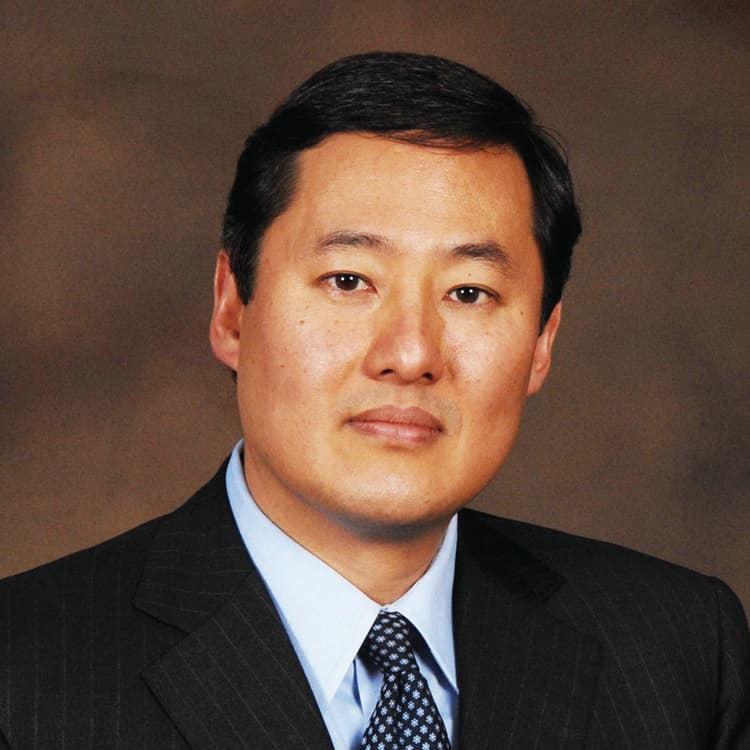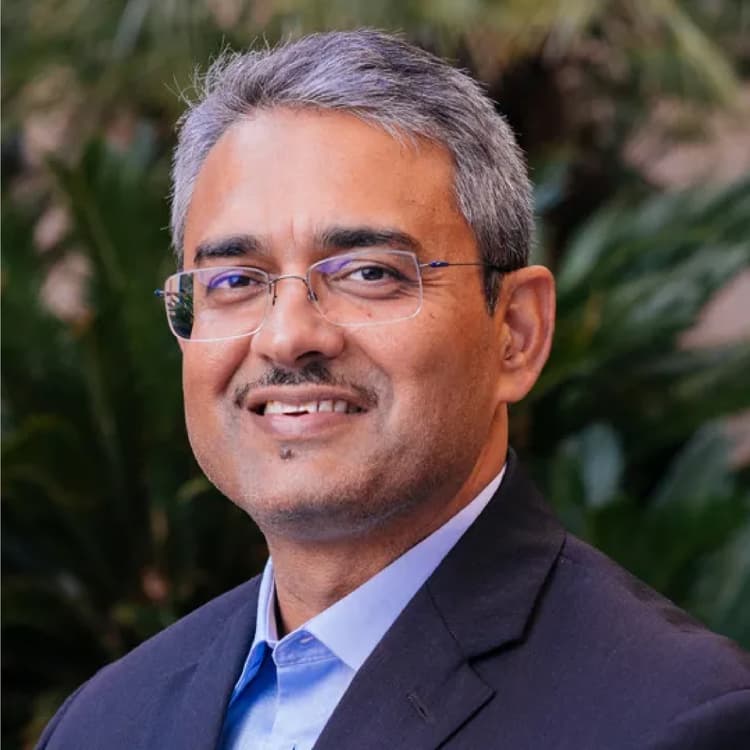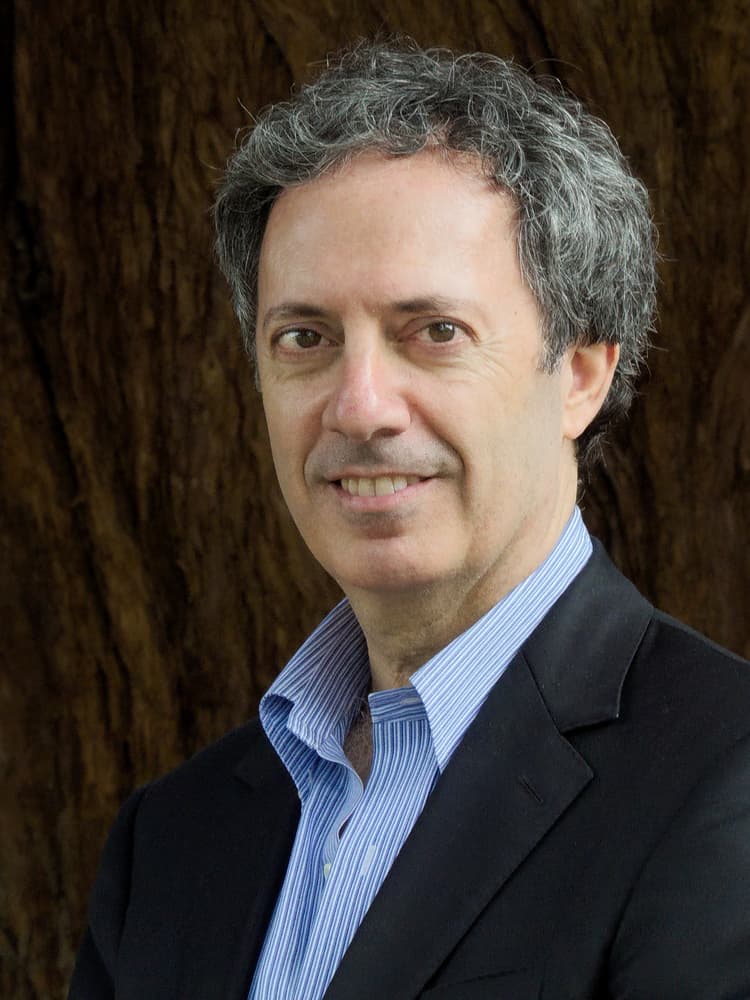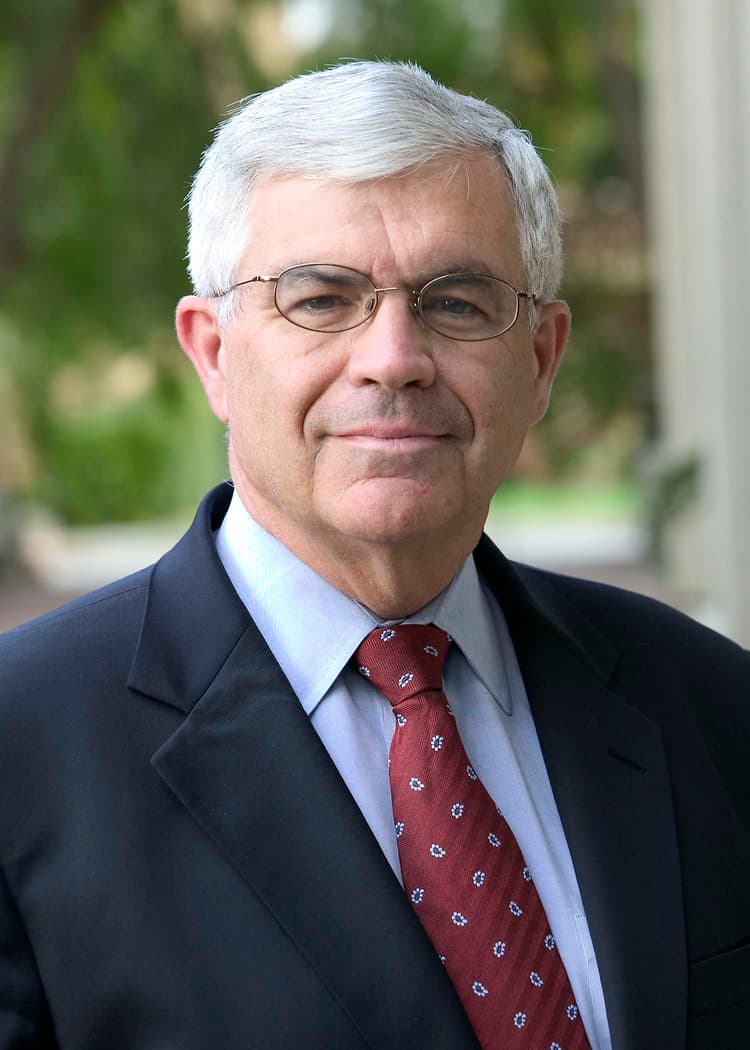
The Hoover Institution Summer Policy Boot Camp is an intensive, one-week program exclusively available to college students, recent graduates, and young professionals on the economic, political, and social aspects of US public policy. Now anyone can access its incredible educational materials. This series brings the lessons of the boot camp to all, providing instruction on public policy approaching critically the formulation of public policy and its results.Interested in attending the Hoover Institution Summer Policy Boot Camp? Click here for more information.
Featured
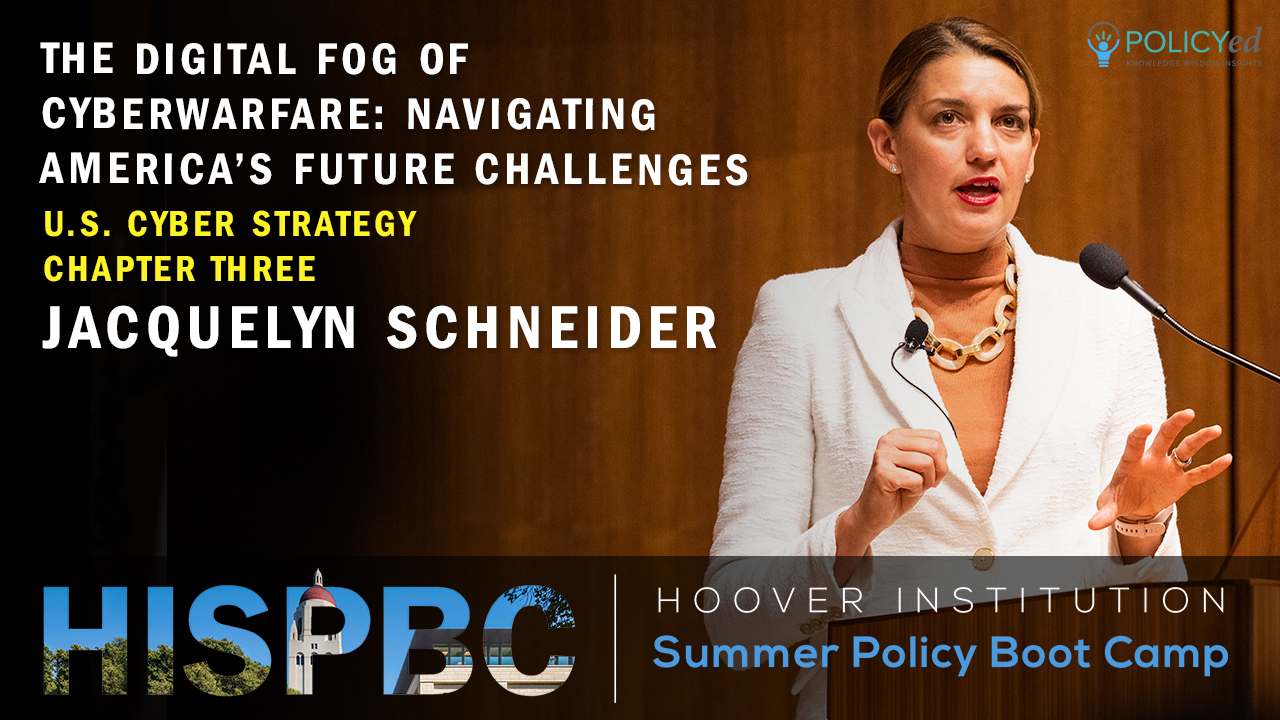
The Digital Fog of Cyberwarfare: Navigating America’s Future Challenges
Tad and Dianne Taube Director | Thomas and Barbara Stephenson Senior Fellow on Public Policy
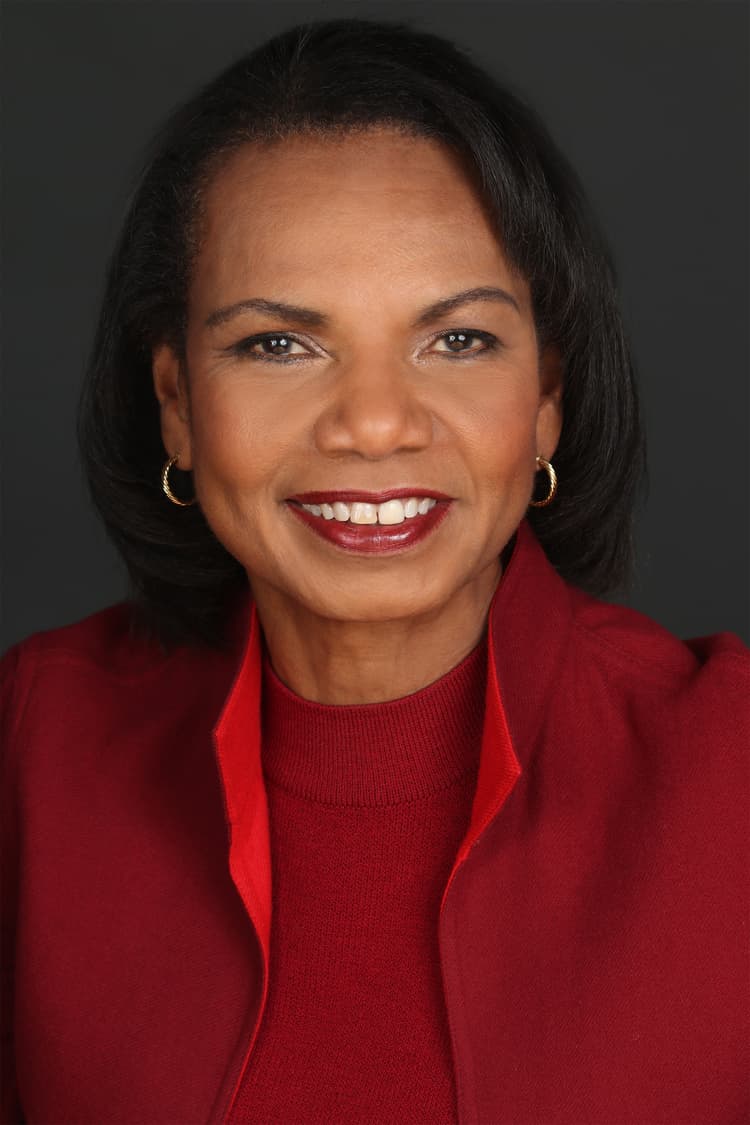
Condoleezza Rice is the Tad and Dianne Taube Director of the Hoover Institution and the Thomas and Barbara Stephenson Senior Fellow on Public Policy. She is the Denning Professor in Global Business and the Economy at the Stanford Graduate School of Business. In addition, she is a founding partner of Rice, Hadley, Gates & Manuel LLC, an international strategic consulting firm.
From January 2005 to January 2009, Rice served as the 66th Secretary of State of the United States, the second woman and first black woman to hold the post. Rice also served as President George W. Bush’s Assistant to the President for National Security Affairs (National Security Advisor) from January 2001 to January 2005, the first woman to hold the position.
Rice served as Stanford University’s provost from 1993 to 1999, during which time she was the institution’s chief budget and academic officer. As Professor of Political Science, she has been on the Stanford faculty since 1981 and has won two of the university’s highest teaching honors.
From February 1989 through March 1991, Rice served on President George H.W. Bush’s National Security Council staff. She served as Director, then Senior Director, of Soviet and East European Affairs, as well as Special Assistant to the President for National Security. In 1986, while an International Affairs Fellow of the Council on Foreign Relations, Rice also served as Special Assistant to the Director of the Joint Chiefs of Staff.
She has authored and co-authored numerous books, most recently To Build a Better World: Choices to End the Cold War and Create a Global Commonwealth (2019), co-authored with Philip Zelikow. Among her other volumes are three bestsellers, Democracy: Stories from the Long Road to Freedom (2017); No Higher Honor: A Memoir of My Years in Washington (2011); and Extraordinary, Ordinary People: A Memoir of Family (2010). She also wrote Political Risk: How Businesses and Organizations Can Anticipate Global Insecurity (2018) with Amy B. Zegart; Germany Unified and Europe Transformed: A Study in Statecraft (1995) with Philip Zelikow; edited The Gorbachev Era (1986) with Alexander Dallin; and penned The Soviet Union and the Czechoslovak Army; 1948-1983: Uncertain Allegiance (1984).
In 1991, Rice co-founded the Center for a New Generation (CNG), an innovative, after-school academic enrichment program for students in East Palo Alto and East Menlo Park, California. In 1996, CNG merged with the Boys & Girls Club of the Peninsula, an affiliate club of the Boys & Girls Clubs of America (BCGA). CNG has since expanded to local BGCA chapters in Birmingham, Atlanta, and Dallas. Rice remains an active proponent of an extended learning day through after-school programs.
Since 2009, Rice has served as a founding partner at Rice, Hadley, Gates, & Manuel LLC, an international strategic consulting firm based in Silicon Valley and Washington, D.C. The firm works with senior executives of major companies to implement strategic plans and expand in emerging markets. Other partners include former National Security Advisor Stephen J. Hadley, former Secretary of Defense Robert M. Gates, and former diplomat, author, and advisor on emerging markets, Anja Manuel.
In 2022, Rice became a part-owner of the Denver Broncos as a part of the Walton-Penner Family Ownership Group. In 2013, Rice was appointed to the College Football Playoff Selection Committee, formerly the Bowl Championship Series. She served on the committee until 2017.
Rice currently serves on the boards of C3.ai, an AI software company; and Makena Capital Management, a private endowment firm. In addition, she is Vice Chair of the Board of Governors of the Boys & Girls Clubs of America and a trustee of the Aspen Institute. Previously, Rice served on various boards, including Dropbox; the George W. Bush Institute; the Commonwealth Club; KiOR, Inc.; the Chevron Corporation; the Charles Schwab Corporation; the Transamerica Corporation; the Hewlett-Packard Company; the University of Notre Dame; the Foundation of Excellence in Education; the John F. Kennedy Center for the Performing Arts; and the San Francisco Symphony.
Born in Birmingham, Alabama, Rice earned her bachelor’s degree in political science, cum laude and Phi Beta Kappa, from the University of Denver; her master’s in the same subject from the University of Notre Dame; and her Ph.D., likewise in political science, from the Graduate School of International Studies at the University of Denver.
Rice is a Fellow of the American Academy of Arts and Sciences and has been awarded over fifteen honorary doctorates.
Terry L. Anderson has been a senior fellow at the Hoover Institution since 1998 and is currently the John and Jean De Nault Senior Fellow (adjunct). He is the past president of the Property and Environment Research Center in Bozeman, MT, and a Professor Emeritus at Montana State University where he won many teaching awards during his 25 year career.
Anderson is one of the founders of “free market environmentalism,” the idea of using markets and property rights to solve environmental problems, and in 2015 published the third edition of his co-authored book by that title. He is author or editor of 39 books, including most recently, Unlocking the Wealth of Indian Nations (2016), exploring the institutional underpinnings of American Indian reservation economies.
In addition to publishing in professional journals, Terry Anderson speaks around the world and is often featured in the popular press, including frequent editorials in the Wall Street Journal. Dr. Anderson received his Ph.D. from the University of Washington in 1972 and has been a visiting scholar at Oxford University, Basel University, Clemson University, and Cornell, and a Fulbright Fellow at the University of Canterbury.
Terry is an avid outdoorsman who enjoys fly fishing, hiking, skiing, horseback riding, and archery hunting.
George Pratt Shultz passed away on February 6, 2021.
Shultz was the Thomas W. and Susan B. Ford Distinguished Fellow at the Hoover Institution. He had a distinguished career in government, in academia, and in the world of business. Shultz was one of two individuals who have held four different federal cabinet posts; he taught at three of this country’s great universities; and for eight years he was president of a major engineering and construction company.
Shultz was born in New York City on December 13, 1920, and grew up in Englewood, New Jersey. He attended Princeton University, graduating in 1942 with a BA in economics. Shortly after graduation, he enlisted in the US Marine Corps and served through 1945. He then resumed his studies, this time at the Massachusetts Institute of Technology (MIT), where he earned a PhD in industrial economics in 1949. From 1948 to 1957 he taught at MIT, taking a leave of absence in 1955 to serve as a senior staff economist on President Eisenhower’s Council of Economic Advisers.
In 1957, Shultz joined the faculty of the University of Chicago’s Graduate School of Business as a professor of industrial relations. He was named dean five years later. From 1968 to 1969 he was a fellow at the Center for Advanced Study in the Behavioral Sciences at Stanford University. He returned to government when he was appointed secretary of labor by President Nixon in 1969. In June 1970, he became the first director of the newly formed Office of Management and Budget. In May 1972, he was named secretary of the Treasury, a post he held for two years. During this period, Shultz also served as chairman of the Council on Economic Policy, negotiated a series of trade protocols with the Soviet Union, and represented the United States at the Tokyo meeting on the General Agreement on Tariffs and Trade.
Shultz left government service in 1974 to become president and director of the Bechtel Group, where he remained until 1982. While at Bechtel, he maintained close ties with the academic world by joining the faculty of Stanford University.
Shultz held two key positions in the Reagan administration: chairman of the President’s Economic Policy Advisory Board (1981–82) and secretary of state (1982–89). As secretary of state, he played a key role in implementing a foreign policy that led to the successful conclusion of the Cold War and the development of strong relationships between the United States and the countries of the Asia-Pacific region including China, Japan, and the Association of Southeast Asian Nations.
After leaving office, Shultz rejoined the Bechtel Group as director and senior counselor. He also rejoined Stanford as professor of international economics at the Graduate School of Business and as a distinguished fellow at the Hoover Institution. In 2001, Shultz was named the Thomas W. and Susan B. Ford Distinguished Fellow at the Hoover Institution.
In January 1989, Shultz was awarded the Medal of Freedom, the nation’s highest civilian honor. He is also a recipient of the Seoul Peace Prize (1992), the West Point Sylvanus Thayer Award (1992), the Eisenhower Medal for Leadership and Service (2001), the Reagan Distinguished American Award (2002), and the Association for Diplomatic Studies and Training’s Ralph Bunche Award for Diplomatic Excellence (2002). Other honors awarded in 2002 include the Elliot Richardson Prize for Excellence and Integrity in Public Service, the James H. Doolittle Award, and the John Witherspoon Medal for Distinguished Statesmanship. The George Shultz National Foreign Affairs Training Center in Arlington, Virginia, was dedicated in a ceremony on May 29, 2002. Shultz was named a distinguished fellow of the American Economic Association in 2005 and received the American Spirit Award from the National World War II Museum in 2006. In 2007, he received the George Marshall Award from the United States Agency for International Development and the Truman Medal for Economic Policy. He received the Rumford Prize from the American Academy of Arts and Sciences in 2008 and the Commandant’s Leadership Award from the Marine Corps–Law Enforcement Foundation in 2009. In 2011, he received the Congressional Medal of Honor Society’s Distinguished Citizen Award and the first Economic Club of New York Award for Leadership Excellence. In 2012, he was presented with a Democracy Service Medal by the National Endowment for Democracy and received the Henry A. Kissinger Prize at the American Academy in Berlin. The Ronald Reagan Presidential Foundation dedicated the Global Issues and Reagan-Gorbachev Summits Galleries in his honor in June 2012.
Shultz’s publications include Thinking about the Future (Hoover Institution Press, June 2019); Learning from Experience (Hoover Institution Press, October 2016); Issues on My Mind: Strategies for the Future (Hoover Institution Press, 2013); The Nuclear Enterprise: High-Consequence Accidents: How to Enhance Safety and Minimize Risks in Nuclear Weapons and Reactors (Hoover Institution Press, 2012), coedited with Sidney Drell; Ideas & Action: Featuring 10 Commandments for Negotiations (2010); Ending Government Bailouts as We Know Them (Hoover Institution Press 2010), coedited with Kenneth E. Scott and John Taylor; Putting Our House in Order: A Citizen’s Guide to Social Security and Health Care Reform, with John B. Shoven (2008); Turmoil and Triumph: My Years as Secretary of State (1993); Economic Policy beyond the Headlines, with Kenneth Dam (1977); Workers and Wages in the Urban Labor Market, with Albert Rees (1970); Guidelines, Informal Controls, and the Marketplace, with Robert Aliber (1966); Strategies for the Displaced Worker: Confronting Economic Change, with Arnold Weber (1966); Management Organization and the Computer, with Thomas Whisler (eds.) (1960); Labor Problems: Cases and Readings, with John Coleman (1959); The Dynamics of a Labor Market, with Charles Myers (1951); Pressures on Wage Decisions (1951); "Case Study No. 10," with Robert P. Crisara, in Causes of Industrial Peace under Collective Bargaining (1951); and "Case Study No. 7," with Charles A. Myers, in Causes of Industrial Peace under Collective Bargaining (1950).
Shultz holds honorary degrees from Notre Dame, Columbia, Loyola, University of Pennsylvania, Rochester, Princeton, Carnegie-Mellon, City University of New York, Yeshiva University, Weizmann Institute of Science, Baruch College of New York, Hebrew University of Jerusalem, Tbilisi State University in the Republic of Georgia, Technion, Keio University in Tokyo, Williams College, and Peking University.
George P. Shultz Senior Fellow in Economics (joint)
Joshua Rauh is the Ormond Family Professor of Finance at Stanford’s Graduate School of Business and the George P. Shultz Senior Fellow in Economics (joint) at the Hoover Institution. He leads the Hoover Institution's Fiscal Policy Initiative and the Hoover Institution State and Local Governance Initiative. He formerly served at the White House where he was principal chief economist on the President’s Council of Economic Advisers (2019-20), and taught at the University of Chicago’s Booth School of Business (2004–9) and the Kellogg School of Management (2009–12). At the Hoover Institution he has served as Director of Research (2018-19). He has testified before House, Joint, and Joint Select Committees of the United States Congress, and he is a member of the Panel of Economic Advisers of the Congressional Budget Office.
His research focuses on government liabilities, corporate and individual taxation, and institutional investing. His work has received media coverage in outlets such as the Wall Street Journal, the New York Times, the Financial Times, and The Economist. He has received various awards recognizing his scholarship including the Brattle Prize and the Smith Breeden Prize of the American Finance Association. His scholarly papers have appeared in journals such as the Journal of Political Economy, the Quarterly Journal of Economics, the Journal of Finance, the Journal of Financial Economics, the Review of Financial Studies, and the Journal of Public Economics. He is a Research Associate of the National Bureau of Economic Research.
He has published numerous op-eds in outlets including the Wall Street Journal, The Hill, and The National Review online. His PragerU videos on public pensions, the role of government, and taxation and inequality have together been viewed over 10 million times. He is the founder of the Liberty Lens Economics Substack.
Prior to his academic career, Dr. Rauh was an associate economist at Goldman Sachs in London. He received a BA from Yale University and a PhD from the Massachusetts Institute of Technology, both in economics.
Admiral James O. Ellis Jr. is Annenberg Distinguished Visiting Fellow at the Hoover Institution, where he oversees both the Global Policy and Strategy Initiative and the George P. Shultz Energy Policy Working Group. He retired from a 39-year career with the US Navy in 2004. He has also served in the private and nonprofit sectors in areas of energy and nuclear security.
A 1969 graduate of the US Naval Academy, Ellis was designated a naval aviator in 1971. His service as a navy fighter pilot included tours with two carrier-based fighter squadrons and assignment as commanding officer of an F/A-18 strike fighter squadron. In 1991, he assumed command of the USS Abraham Lincoln, a nuclear-powered aircraft carrier. After selection to rear admiral, in 1996, he served as a carrier battle group commander, leading contingency response operations in the Taiwan Strait.
His shore assignments included numerous senior military staff tours. Senior command positions included commander in chief, US Naval Forces, Europe, and commander in chief, Allied Forces, Southern Europe, during a time of historic NATO expansion. He led US and NATO forces in combat and humanitarian operations during the 1999 Kosovo crisis.
Ellis’s final assignment in the navy was as commander of the US Strategic Command during a time of challenge and change. In this role, he was responsible for the global command and control of US strategic and space forces, reporting directly to the secretary of defense.
After his naval career, he joined the Institute of Nuclear Power Operations (INPO) as president and chief executive officer. INPO, sponsored by the commercial nuclear industry, is an independent, nonprofit organization whose mission is to promote the highest levels of safety and reliability in the operation of commercial nuclear electric generating plants. He retired from INPO in 2012.
Ellis is also the former board chair of Level 3 Communications and served on the board of Lockheed Martin Corporation and Dominion Energy. In 2006, he became a member of the Military Advisory Panel to the Iraq Study Group. In 2009, he completed three years of service on the President’s Intelligence Advisory Board. A former board chair of the nonprofit Space Foundation, in 2018 he was appointed chairman of the Users’ Advisory Group to the Vice President’s National Space Council, where he served until 2022.
Ellis holds a master’s degree in aerospace engineering from the Georgia Institute of Technology. He was inducted into the school’s Engineering Hall of Fame in 2005. He completed US Navy Nuclear Power Training and was qualified in the operation and maintenance of naval nuclear propulsion plants. He is a graduate of the Navy Test Pilot School and the Navy Fighter Weapons School (Top Gun). In 2013, Ellis was elected to the National Academy of Engineering for “contributions to global nuclear safety.”
Rose and Milton Friedman Senior Fellow on Public Policy
Michael J. Boskin is the Rose and Milton Friedman Senior Fellow on Public Policy at the Hoover Institution and the Tully M. Friedman Professor of Economics at Stanford. He is also a research associate of the National Bureau of Economic Research. In addition, he advises governments and businesses globally.
Boskin served as chairman of the President’s Council of Economic Advisers (CEA) from 1989 to 1993, when he helped resolve the Third World Debt and Saving and Loan financial crises, and place the first effective controls on government spending while protecting the defense budget. His CEA was rated by the Council for Excellence in Government as one of the five most respected agencies in the federal government. He earlier served on presidential candidate Ronald Reagan’s Tax Policy Task Force, helping develop the policies that, during Reagan’s presidency, substantially lowered marginal tax rates, indexed tax brackets for inflation, accelerated depreciation, and created IRAs and 401Ks, the economic rationale for which was predicated on his research on the effects of taxes on saving. He later chaired the highly influential blue-ribbon Advisory Commission to Study the Consumer Price Index, whose report has transformed the way government statistical agencies around the world measure inflation, GDP, and productivity.
Boskin serves on several corporate and philanthropic boards of directors, including those of the Oracle Corporation, the Koret Foundation and Bloom Energy.
In addition to Stanford and the University of California, Boskin has taught at Harvard and Yale. The author of more than one hundred fifty books and articles, he is internationally recognized for his research on world economic growth, tax and budget theory and policy, US saving and consumption patterns, and the implications of changing technology and demography on capital, labor, and product markets. His op-eds appear regularly in the Wall Street Journal and other leading newspapers. He also writes a bimonthly column on global economics and politics syndicated in 145 countries.
Boskin has received numerous professional awards and citations, including Stanford’s Distinguished Teaching Award in 1988; the National Association of Business Economists’ Abramson Award for outstanding research and its Distinguished Fellow Award; the Medal of the President of the Italian Republic in 1991 for his contributions to global economic understanding; and the 1998 Adam Smith Prize for outstanding contributions to economics.
Boskin received his BA with highest honors and the Chancellor’s Award as outstanding undergraduate from the University of California–Berkeley, where he also received his MA and PhD.
His research papers and op-eds are available at the Hoover Institution Archives and on his personal website. His current research focuses on the defense budget, federalism, the political economy of redistribution, and more generally, public economics and macroeconomics.
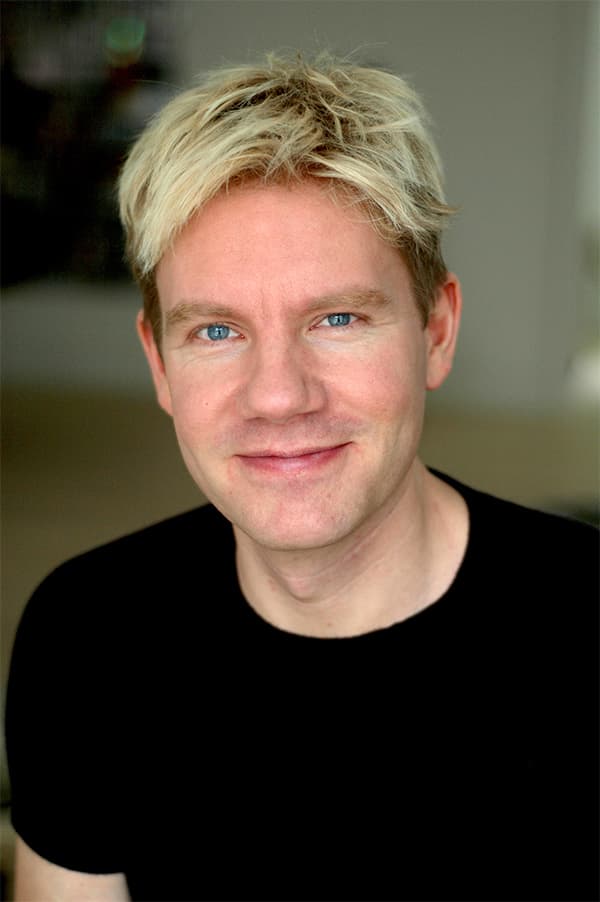
Bjorn Lomborg is a visiting fellow at the Hoover Institution.
Dr. Bjorn Lomborg is president of the Copenhagen Consensus Center and visiting professor at Copenhagen Business School. His numerous books include The Skeptical Environmentalist, Cool It, How to Spend $75 Billion to Make the World a Better Place, The Nobel Laureates’ Guide to the Smartest Targets for the World: 2016–2030, and Prioritizing Development: A Cost Benefit Analysis of the United Nation’s Sustainable Development Goals.
The Copenhagen Consensus Center is a think tank that researches the smartest solutions for the world's biggest problems, advising policy makers and philanthropists how to spend their money most effectively. It brings together many of the world’s top economists, including seven Nobel laureates, to set priorities both at a global and a country or state level. It is the winner of Prospect magazine’s 2016 Think Tank of the Year award in the International Affairs category for think tanks based in the United States. The center’s work was commended by the judges as being “truly innovative and global in its scope.” In the 2018 Global Go To Think Tank Index Report, Copenhagen Consensus was once again acknowledged for having launched one of the top 20 advocacy campaigns anywhere in the world, for the sixth year running. The Economist said: “Copenhagen Consensus is an outstanding, visionary idea and deserves global coverage.”
For this work, Lomborg was named one of Time magazine’s 100 most influential people in the world. In 2011 and 2012, Lomborg was named among the Top 100 Global Thinkers by Foreign Policy “for looking more right than ever on the politics of climate change.” In 2008 he was named “one of the 50 people who could save the planet” by the UK Guardian. In 2005 and 2008, Foreign Policy and Prospect magazine called him "one of the top 100 public intellectuals,” and in 2008 Esquire named him “one of the world’s 75 most influential people of the 21st century.”
Lomborg is a frequent participant in public debates on policy issues. His analysis and commentaries appear regularly in such prestigious publications as the New York Times, the Washington Post, the Wall Street Journal, USA Today, the Economist, Foreign Affairs, the Atlantic, Forbes, the Globe and Mail, theGuardian, the Telegraph, the Sunday Times, the Australian, the Los Angeles Times, the Boston Globe, and Der Spiegel.
Michael W. McConnell is the Richard and Frances Mallery Professor of Law and the director of the Constitutional Law Center at Stanford Law School, and a senior fellow at the Hoover Institution. From 2002 to 2009, he served as a circuit judge on the US Court of Appeals for the Tenth Circuit. He was nominated by President George W. Bush, a Republican, and confirmed by a Democratic-majority Senate by unanimous consent. McConnell has previously held chaired professorships at the University of Chicago and the University of Utah, and visiting professorships at Harvard and New York University. He teaches courses on constitutional law, constitutional history, the First Amendment, and interpretive theory. He has published widely in the fields of constitutional law and theory, especially on matters relating to church and state, equal protection, and the separation of powers.
His latest book, The President Who Would Not Be King: Executive Power under the Constitution, was published by Princeton University Press in November 2020. McConnell has argued fifteen cases in the US Supreme Court, most recently a 8-1 victory in a Takings Clause case on behalf of California raisin farmers. He served as law clerk to Supreme Court Justice William J. Brennan Jr. and DC Circuit Chief Judge J. Skelly Wright. He has been assistant general counsel of the Office of Management and Budget, assistant to the solicitor general of the Department of Justice, and a member of the President’s Intelligence Oversight Board. He is senior of counsel to the law firm Wilson, Sonsini, Goodrich & Rosati.
Stephen Haber is the Park L. Loughlin Senior Fellow at the Hoover Institution and director of the Hoover Program on the Foundations for Economic Prosperity. He is the A.A. and Jeanne Welch Milligan Professor in the School of Humanities and Sciences at Stanford University, and senior fellow at the Stanford Institute for Economic Policy Research. In addition, he is a professor of political science, professor of history, and professor of economics (by courtesy).
Haber has spent his career investigating why the world distribution of income so uneven. His papers have been published in economics, history, political science, and law journals. He is the author of five books and the editor of six more. Haber’s most recent books include Fragile by Design with Charles Calomiris (Princeton University Press), which examines how governments and industry incumbents often craft banking regulatory policies in ways that stifle competition and increase systemic risk. The Battle Over Patents (Oxford University Press), a volume edited with Naomi Lamoreaux, documents the development of US-style patent systems and the political fights that have shaped them.
His latest project focuses on a long-standing puzzle in the social sciences: why are prosperous democracies not randomly distributed across the planet, but rather, are geographically clustered? Haber and his coauthors answer this question by using geospatial tools to simulate the ecological conditions that shaped pre-industrial food production and trade. They then employ machine learning methods to elucidate the relationship between ecological conditions and the levels of economic development that emerged across the globe over the past three centuries.
Haber holds a Ph.D. in history from UCLA and has been on the Stanford faculty since 1987. From 1995 to 1998, he served as associate dean for the social sciences and director of Graduate Studies of Stanford’s School of Humanities and Sciences. He is among Stanford’s most distinguished teachers, having been awarded every teaching prize Stanford has to offer.
John Yoo was a visiting fellow at the Hoover Institution.
Yoo is the Emanuel S. Heller Professor of Law at the University of California–Berkeley School of Law and a visiting scholar at the American Enterprise Institute. His most recent book is Defender in Chief: Donald Trump’s Fight for Presidential Power (St. Martin’s 2020).
Yoo has served in all three branches of government. He was an official in the US Department of Justice, where he worked on national security and terrorism issues after the September 11 attacks. He served as general counsel of the US Senate Judiciary Committee under its chairman, Orrin Hatch of Utah. He has been a law clerk for Supreme Court Justice Clarence Thomas and US Court of Appeals Judge Laurence Silberman.
He held the Fulbright Distinguished Chair in Law at the University of Trento in Italy, and he has also been a visiting professor at Keio Law School in Japan, Seoul National University in Korea, Chapman Law School, the University of Chicago, and the Free University of Amsterdam. Professor Yoo also has received the Paul M. Bator Award for excellence in legal scholarship and teaching from the Federalist Society for Law and Public Policy.
Yoo is the author of a number of books: Striking Power: How Cyber, Robots, and Space Weapons Change the Rules for War(2017); Point of Attack (2014); Taming Globalization (2012); Crisis and Command (2010); War by Other Means (2016); and The Powers of War and Peace (2005). He has co-edited three other books, most recently Liberty’s Nemesis: The Unchecked Expansion of the State (2016) (with Dean Reuter).
Professor Yoo received his B.A., summa cum laude, in American history from Harvard University. Between college and law school, he worked as a newspaper reporter in Washington, D.C. He received his J.D. from Yale Law School, where he was an articles editor of the Yale Law Journal.
John Yoo co-hosts the Pacific Century podcast with Michael Auslin, broadly addressing developments in China and Asia. They discuss the latest politics, economics, law, and cultural news, with a focus on US policy in the region. He also co-hosts LawTalk with Richard Epstein and Troy Senik, discussing the latest developments in law and politics.
Erik Hurst is the V. Duane Rath Professor of Economics and John E. Jeuck Faculty Fellow at the University of Chicago, Booth School of Business. He is also the current deputy director of the University of Chicago’s Becker-Friedman Institute and a visiting fellow at the Hoover Institution.
He serves as a research associate for the National Bureau of Economic Research, a visiting scholar at the Federal Reserve Bank of Chicago, and a coeditor of the National Bureau of Economics Macroeconomics Annual. From 20142017, Hurst served as a coeditor for the Journal of Political Economy.
Professor Hurst is a macroeconomist whose research has advanced the understanding of labor markets, consumer theory, housing markets, regional economics, mortgage markets, and entrepreneurship. His research on these topics has appeared in top economic journals and is frequently cited in The Economist, the Wall Street Journal, the Washington Post, and the New York Times.
Professor Hurst received the 2006 TIAA-CREF Paul Samuelson Award for the best published paper dealing with household financial security and was also awarded the 2012 Ewing Marion Kauffman Prize Medal for Distinguished Research in Entrepreneurship bestowed annually to one scholar under the age of forty whose research has made a significant contribution to the entrepreneurship literature.
In both 2008 and 2010, the Chicago Booth students awarded Professor Hurst the Emory Williams Award for Teaching Excellence. In 2013 the students awarded him their Faculty Excellence Award for his commitment to teaching. And in 2017 Hurst was awarded the McKinsey prize for best teacher at Chicago Booth.
Professor Hurst earned a BA in economics in 1993 from Clarkson University. He went on to earn an MA in economics in 1995 and a PhD in economics in 1999 from the University of Michigan.
Amit Seru
Senior Fellow
Amit Seru is a Senior Fellow at the Hoover Institution, the Steven and Roberta Denning Professor of Finance at the Stanford Graduate School of Business (Stanford GSB), a senior fellow at Stanford Institute for Economic Policy Research (SIEPR), and a Research Associate at the National Bureau of Economic Research (NBER). He was formerly a faculty member at the University of Chicago’s Booth School of Business. He is currently co-directing Hoover initiatives on corporate governance, long-run prosperity, and regulation and the rule of law.
Professor Seru’s research focuses on corporate finance with an emphasis on financial intermediation and regulation, technological innovation and incentive provision and financing in firms. His research in these areas has been published in American Economic Review, Journal of Political Economy, Quarterly Journal of Economics, Review of Economic Studies, Journal of Finance, Journal of Financial Economics, Review of Financial Studies, and other peer-reviewed journals. He is a co-editor of the Journal of Finance and was previously an editor of Review of Corporate Finance Studies, department editor (Finance) of Management Science and an associate editor of the Journal of Political Economy.
He has presented his research to U.S. and international regulatory agencies, including the Bank for International Settlement (BIS), Consumer Finance Protection Bureau (CFPB), European Central Bank (ECB), Federal Reserve, Federal Deposit Insurance Corporation (FDIC), Financial Industry Regulatory Authority (FINRA), the International Monetary Fund (IMF), the Monetary Authority of Singapore (MAS), the Office of the Comptroller of the Currency (OCC), and the Securities and Exchange Commission (SEC). Most recently, he gave the Biennial Andrew Crockett lecture on regulation of banks in the era of fintechs to central bank governors around the world at the BIS. He has received various National Science Foundation grants, the Alexandre Lamfalussy research fellowship from BIS and was named as one of the top 25 Economists under 45 by the International Monetary Fund in 2014. His research has been featured in major media, including the Wall Street Journal, The New York Times, the Financial Times and the Economist. His opinion essays have appeared in several outlets including the Wall Street Journal and The New York Times.
Seru earned a B.E. in electronics and communication and an MBA from the University of Delhi. Subsequently, he received a PhD in finance from the University of Michigan. He was a senior consultant at Accenture before pursuing his Ph.D. Seru was the recipient of a Rackham Pre-Doctoral Fellowship at University of Michigan and received a Lt. Governor’s gold medal for overall academic excellence at the University of Delhi.
Peter Berkowitz is the Tad and Dianne Taube Senior Fellow at the Hoover Institution, Stanford University.
In 2019-2021, he served as the Director of the State Department’s Policy Planning Staff, executive secretary of the department's Commission on Unalienable Rights, and senior adviser to the Secretary of State.
He is a 2017 recipient of the Bradley Prize.
He is a columnist for RealClearPolitics.
He serves as director of studies for The Public Interest Fellowship.
He is the author of Constitutional Conservatism: Liberty, Self-Government, and Political Moderation (Hoover Institution Press, 2013); Israel and the Struggle over the International Laws of War (Hoover Institution Press, 2012); Virtue and the Making of Modern Liberalism (Princeton University Press, 1999); and Nietzsche: The Ethics of an Immoralist (Harvard University Press, 1995).
He is the editor of seven collections of essays on political ideas and institutions published by the Hoover Institution: Renewing the American Constitutional Tradition (2014); Future Challenges in National Security and Law (2010); The Future of American Intelligence (2005); Terrorism, the Laws of War, and the Constitution: Debating the Enemy Combatant Cases (2005); Varieties of Conservatism in America (2004); Varieties of Progressivism in America (2004); and Never a Matter of Indifference: Sustaining Virtue in a Free Republic (2003).
He has written hundreds of articles, essays and reviews on a range of subjects for a variety of publications, including The American Interest, the American Political Science Review, The Atlantic, The Chronicle of Higher Education, the Claremont Review of Books, Commentary, First Things, Forbes.com, Haaretz, The Jerusalem Post, the London Review of Books, National Journal, National Review, The New Criterion, The New Republic, Policy Review, Politico, The Public Interest, the Times Literary Supplement, The Wall Street Journal, the Washington Post, The Weekly Standard, The Wilson Quarterly, and the Yale Law Journal.
In addition to teaching regularly in the United States and Israel, Dr. Berkowitz has led seminars on the principles of freedom and the American constitutional tradition for students from Burma at the George W. Bush Presidential Center and for Korean students at Underwood International College at Yonsei University in Seoul, South Korea.
He taught constitutional law and jurisprudence at George Mason University School of Law from 1999 to 2006, and political philosophy in the department of government at Harvard University from 1990 to 1999.
He holds a JD and a PhD in political science from Yale University; an MA in philosophy from the Hebrew University of Jerusalem; and a BA in English literature from Swarthmore College.
George P. Shultz Senior Fellow in Economics, Emeritus
John B. Taylor is the George P. Shultz Senior Fellow in Economics, Emeritus, at the Hoover Institution and the Mary and Robert Raymond Professor of Economics at Stanford University. He chairs the Hoover Working Group on Economic Policy, co-chairs the Hoover Technology, Economics and Governance Working Group, and is director of Stanford’s Introductory Economics Center.
Taylor's fields of expertise are monetary policy, fiscal policy, and international economics. His book Getting Off Track was one of the first on the financial crisis; his latest book, First Principles, for which he received the 2012 Hayek Prize, develops an economic plan to restore America’s prosperity. His most recent book is Choose Economic Freedom: Enduring Policy Lessons from the 1970s and 1980s with George P. Shultz.
Taylor served as senior economist on President Ford's and President Carter’s Council of Economic Advisers, as a member of President George H. W. Bush's Council of Economic Advisers, and as a senior economic adviser to Bob Dole’s presidential campaign, to George W. Bush’s presidential campaign in 2000, and to John McCain’s presidential campaign. He was a member of the Congressional Budget Office's Panel of Economic Advisers from 1995 to 2001. From 2001 to 2005, Taylor served as undersecretary of the Treasury for international affairs where he was responsible for currency markets, international development, for oversight of the International Monetary Fund and the World Bank, and for coordinating policy with the G-7 and G-20.
Taylor received the Bradley Prize from the Bradley Foundation and the Adam Smith Award as well as the Adolph G. Abramson Award from the National Association for Business Economics. He was awarded the Alexander Hamilton Award for his overall leadership at the US Treasury, the Treasury Distinguished Service Award for designing and implementing the currency reforms in Iraq, and the Medal of the Republic of Uruguay for his work in resolving the 2002 financial crisis. At Stanford he was awarded the George P. Shultz Distinguished Public Service Award, as well as the Hoagland Prize and the Rhodes Prize for excellence in undergraduate teaching. He is a fellow of the American Academy of Arts and Sciences and the Econometric Society; he formerly served as vice president of the American Economic Association.
Taylor received the 2016 Adam Smith Award from the Association of Private Enterprise Education and the 2015 Truman Medal for Economic Policy for extraordinary contribution to the formation and conduct of economic policy.
Taylor formerly held positions as professor of economics at Princeton University and Columbia University. Taylor received a BA in economics summa cum laude from Princeton University in 1968 and a PhD in economics from Stanford University in 1973.
Morris Arnold and Nona Jean Cox Senior Fellow (joint)
Edward P. Lazear passed away on November 23, 2020.
Lazear was the Morris Arnold and Nona Jean Cox Senior Fellow at the Hoover Institution and the Davies Family Professor of Economics at Stanford University's Graduate School of Business. Lazear served at the White House from 2006 to 2009, where he was chairman of the President's Council of Economic Advisers. Before coming to Stanford, he taught at the University of Chicago.
Lazear received numerous honors and prizes: among them, the 1998 Leo Melamed Biennial Prize for the best research by a business school professor, the 2004 Prize for Outstanding Contributions to Labor Economics from the Institute for the Study of Labor, and the 2006 Jacob Mincer Prize for lifetime achievement in the field of labor economics. He held four honorary degrees, the most recent from the Copenhagen Business School (2013).
Founding editor of the Journal of Labor Economics and founder of the Society of Labor Economists, he was also an elected fellow of the American Academy of Arts and Sciences, the American Association for the Advancement of Science, the Econometric Society, and the Society of Labor Economists. He was a research associate of the National Bureau of Economic Research and was a member of the National Academy of Sciences Board on Testing and Assessment. Lazear was the first vice-president and then president of the Society of Labor Economists.
Lazear wrote or edited a dozen books including Personnel Economics (MIT Press, 1995), which expanded on his 1993 Wicksell Lectures. He published more than one hundred papers in leading professional journals.
He received the Distinguished Teaching Award from Stanford University's Graduate School of Business in 1994 and the Distinguished Service Award from Stanford University in 2002.
Lazear held AB and AM degrees from the University of California, Los Angeles, and a PhD from Harvard University.
The Policy Stories series features Hoover Institution scholars in 4-5 minute "mini-documentaries" discussing the real-life implications of public policy throughout the world. These segments offer insights into why these policies are relevant and important for today's public policy discussion.
This series animates succinct policy explanations from various talks, podcasts, and presentations given by policy experts. These videos explain first principles and real world examples in a way that are easy to understand and share with your friends.
John Taylor discusses the major components of fiscal policy and their effect on the US economy. This series covers the complexities of the budget process, the debt and deficit, and the economy and the deficit.