




Articles
The Rich World’s Climate Distraction
The World Bank and other institutions lose their focus on the best ways to help the poor.
September 1, 2026
Jeffrey Schmid sits down with Steven Davis at the 49th edition of the Jackson Hole Economic Policy Symposium. They chat about Kevin Warsh’s keynote speech, innovations in the payments system, digital assets, competition for banks, and what it means for crisis management by the Fed and other central banks.
Recorded on August 29, 2026.
ABOUT THE GUEST
Jeffrey Schmid is president and CEO of the Federal Reserve Bank of Kansas City and a member of the Federal Open Market Committee. Before joining the Kansas City Fed in August 2023, he led the Southwestern Graduate School of Banking Foundation at Southern Methodist University’s Cox School of Business. He began his career in 1981 as a field examiner for the Federal Deposit Insurance Corporation. Later, he served as president of the American National Bank in Omaha and as chairman and CEO of Mutual of Omaha Bank. A native of Nebraska, he earned degrees at the University of Nebraska-Lincoln and the Southwestern Graduate School of Banking at SMU.
Articles
The World Bank and other institutions lose their focus on the best ways to help the poor.
September 1, 2026
Videos
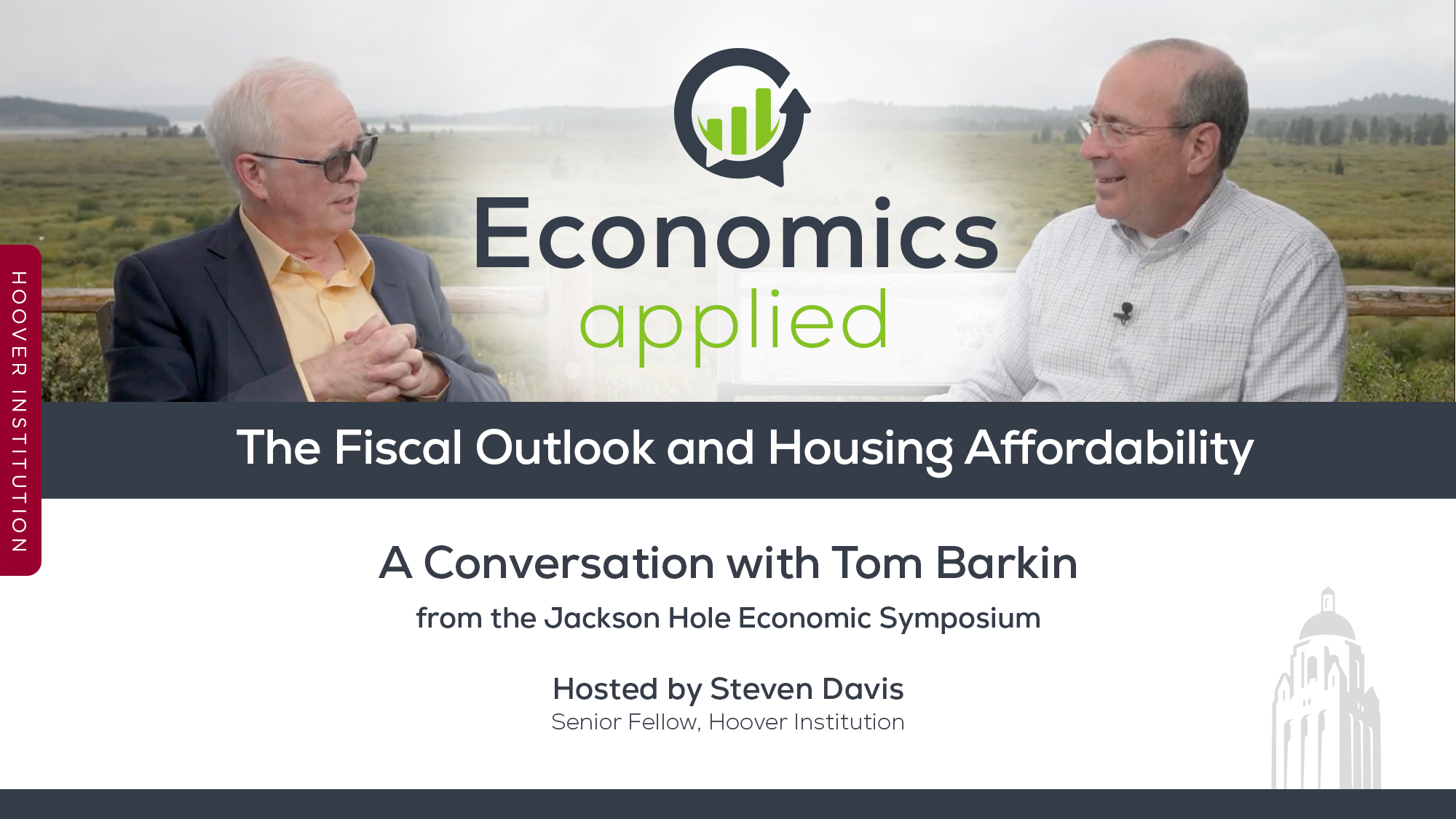
Richmond Fed president and CEO Tom Barkin joins Steve to discuss Kevin Warsh’s keynote speech at the Jackson Hole Economic Policy Symposium.
September 4, 2026
Videos
House Financial Services Committee chair French Hill joins Jon Hartley to discuss housing supply in the United States, crypto rules, securities reform, and expanding access to capital.
September 1, 2026